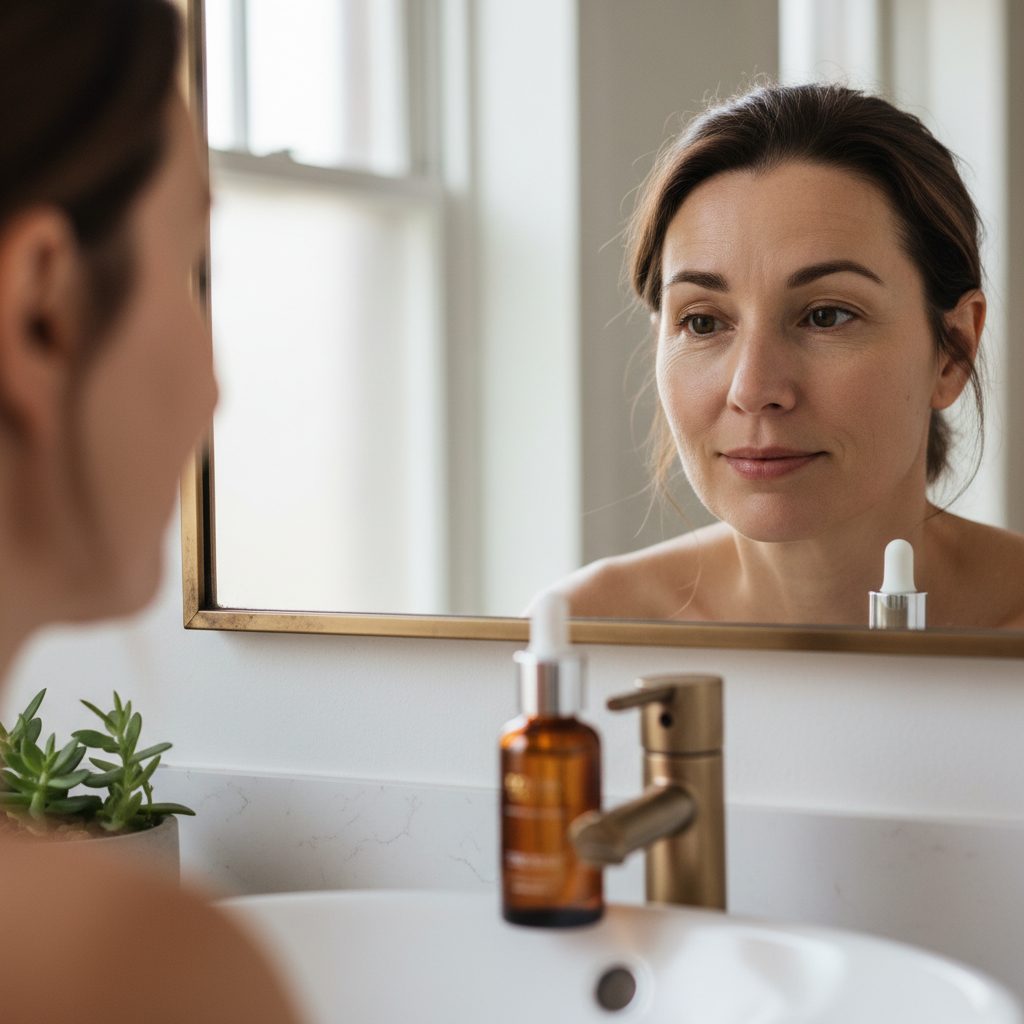
Have you ever looked in the mirror and thought, “Why does my skin look so tired?” You might be doing everything right: cleansing, moisturizing, exfoliating. Yet, your glow still seems to be missing. The real culprit might be deeper than dryness or dullness. It could be zombie cell those aging skin cells that refuse to retire.
Let’s uncover what these zombie cells really are, how they affect your skin, and how modern peptides are helping us fight them for good.
Think of your skin as a busy city full of hardworking cells. Over time, some of these cells stop functioning properly. But instead of disappearing quietly, they stay behind, causing damage. These are senescent cells, or as scientists call them, zombie cell.
Zombie cells release inflammatory chemicals that harm nearby healthy cells and speed up visible aging such as fine lines, sagging, uneven texture, and dullness.

Here come the superheroes of modern skincare: senotherapeutic peptides. These intelligent molecules help your skin eliminate zombie cells or calm them down.
A study in Clinical, Cosmetic and Investigational Dermatology found that a peptide known as Pep 14 reduced senescent cells in skin fibroblasts, the same cells responsible for collagen and elasticity.
These peptides act like a clean-up crew, restoring balance, encouraging collagen production, and improving your skin’s natural repair systems.
Your skin barrier is your first line of defense. It keeps moisture in and pollutants out. When zombie cells build up, they weaken this barrier, making it harder for your skin to stay healthy.
A pilot clinical trial showed that applying a senotherapeutic peptide reduced Transepidermal Water Loss (TEWL) and improved skin barrier strength in older adults. This means your skin retains more hydration and feels smoother, calmer, and more resilient.
Zombie cells are a major cause of chronic skin inflammation. They release pro-inflammatory molecules like IL-8, creating what scientists call inflammaging ongoing, low-level inflammation that accelerates aging.
Nature explains inflammaging here
The same clinical study found that topical peptides not only improved the skin barrier but also reduced inflammatory markers in the bloodstream. This suggests that peptides may support your body’s overall fight against inflammation, not just on the skin’s surface.
Other peptides, such as OS-01, are making major progress in anti-aging research. Studies show OS-01 helps remove zombie fibroblasts, boosts collagen production, and strengthens the skin barrier for long-term resilience.
Together, these discoveries suggest a future where skincare goes beyond the surface to address the biological causes of aging.
If you want to protect your skin from zombie cells, start by building a routine that supports cellular health.
The fight against zombie cells marks a turning point in skincare science. Instead of masking symptoms, senotherapeutic peptides target the root cause: damaged and aging cells that disrupt healthy skin.
By choosing peptide-based products, you are not just chasing a temporary glow. You are rebuilding your skin’s foundation and improving its long-term strength, health, and radiance.
Your skin’s story does not end with aging. With the right science, it can be rewritten to be stronger, smoother, and truly healthy.
Regulatory and Medical Disclaimer: This article does not constitute medical advice. Information regarding peptides is for research and educational purposes only. Peptides are often sold as research chemicals and are not regulated as dietary supplements or medications for human use unless explicitly prescribed by a medical doctor. All research or potential human application of peptides requires strict oversight by a licensed medical professional.