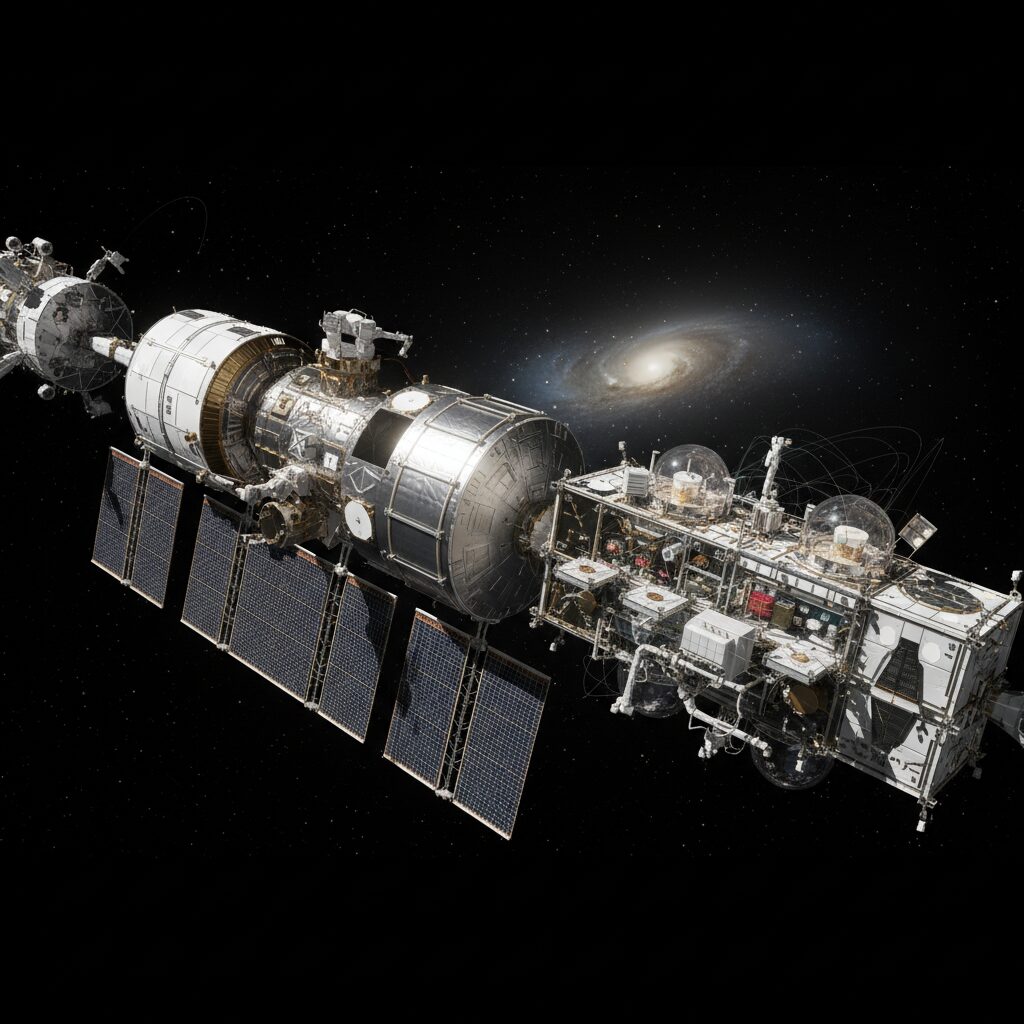
Hey, brilliant minds and fellow cosmic detectives! Ever wondered if life’s first molecules could just poof into existence far from any cozy planet? New research on prebiotic space chemistry from the Chinese Space Station is making us rethink the ultimate origin story.
We used to think space was too harsh for delicate life precursors. However, this study suggests that prebiotic space chemistry is happening right now in the giant laboratory of the stars. It is like finding out your microwave can bake a gourmet cake from scratch!

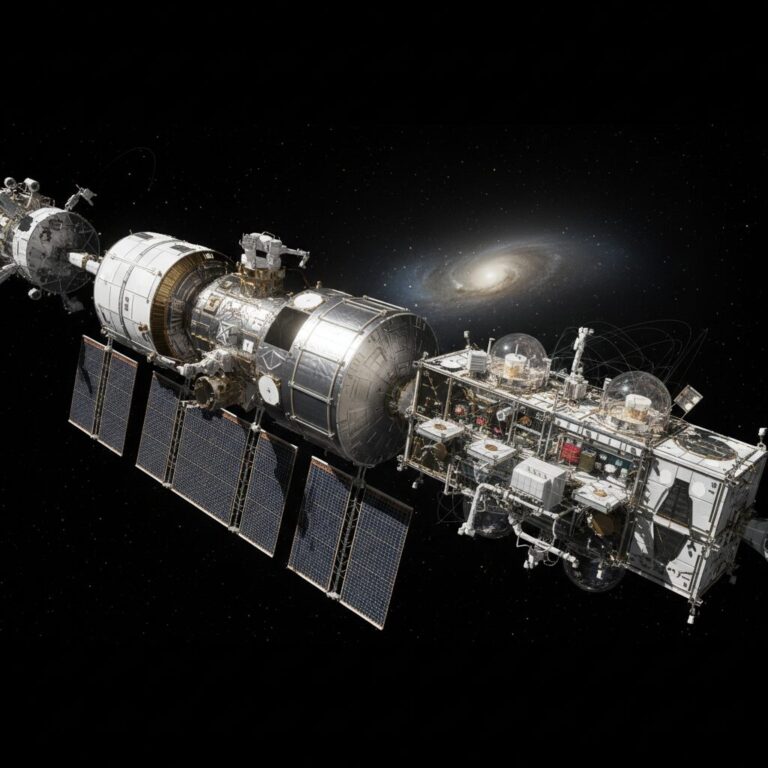
Scientists on the CSS used the Space Radiobiological Exposure Facility to play cosmic chef. They mixed amino acids with a common mineral called forsterite. This magnesium-rich silicate is found in Martian dust and lunar regolith.
When exposed to radiation, these mixtures kickstarted prebiotic space chemistry reactions. The forsterite acted as a catalyst, helping small molecules stick together. This process created dipeptides, which are the simplest forms of proteins.
Phosphorus is essential for DNA, but it is usually locked inside rocks. The CSS team used sodium trimetaphosphate (P3m) to see if radiation could release it. Their success is a huge win for understanding prebiotic space chemistry.
The experiments showed that ionizing radiation activates phosphorus. This allows it to link up with nucleosides to form the backbone of RNA. This breakthrough explains how life’s energy currency might form in a water-free environment.
We usually think of cosmic rays as dangerous and destructive. Surprisingly, these rays act as the power source for prebiotic space chemistry. Low-dose radiation provides just enough energy to forge chemical bonds without destroying them.
The team found that certain dipeptides formed much faster with forsterite present. Specifically, yields increased by up to 90 times in some space units. This efficiency suggests that prebiotic space chemistry is a robust and common phenomenon.
Looking Toward Enceladus and Beyond
This research has massive implications for our search for alien life. We now know that prebiotic space chemistry can occur on icy moons or asteroids. Sites like Enceladus are now even more exciting for future exploration.
If the ingredients for life are made in space, Earth might not be unique. You can learn more about these external space missions and their findings online. We are just beginning to unlock the secrets of our chemical origins.
Our universe is a vibrant, active kitchen cooking up the building blocks of life. These CSS results prove that prebiotic space chemistry thrives in the most extreme conditions. It turns out the stars are much friendlier than we once imagined.