Hey, curious human! Let’s talk about prebiotic peptides early Earth and why they are one of the coolest and weirdest parts of our cosmic origin story. Life today relies on complex proteins made from 20 amazing amino acids.
But billions of years ago, Earth was basically a chaotic cosmic toddler with no rules, no ribosomes, and definitely no full protein menu. So how did anything resembling life begin?
Let’s dive into this deliciously strange beginning of life.
Imagine trying to bake a fancy cake with only flour and water. That is what early Earth had to work with. A small and simple set of amino acids. The fancy basic amino acids we use today such as lysine, arginine and histidine were extremely rare. Think of them as celebrity guests who showed up late to the party.
But the simpler amino acids were everywhere. And the first prebiotic peptides early Earth had access to were short, scrappy chains made from these basic building blocks.
Scientists believe that life started using whatever amino acids were available. Kind of like a toddler putting everything in their mouth just to see what happens.
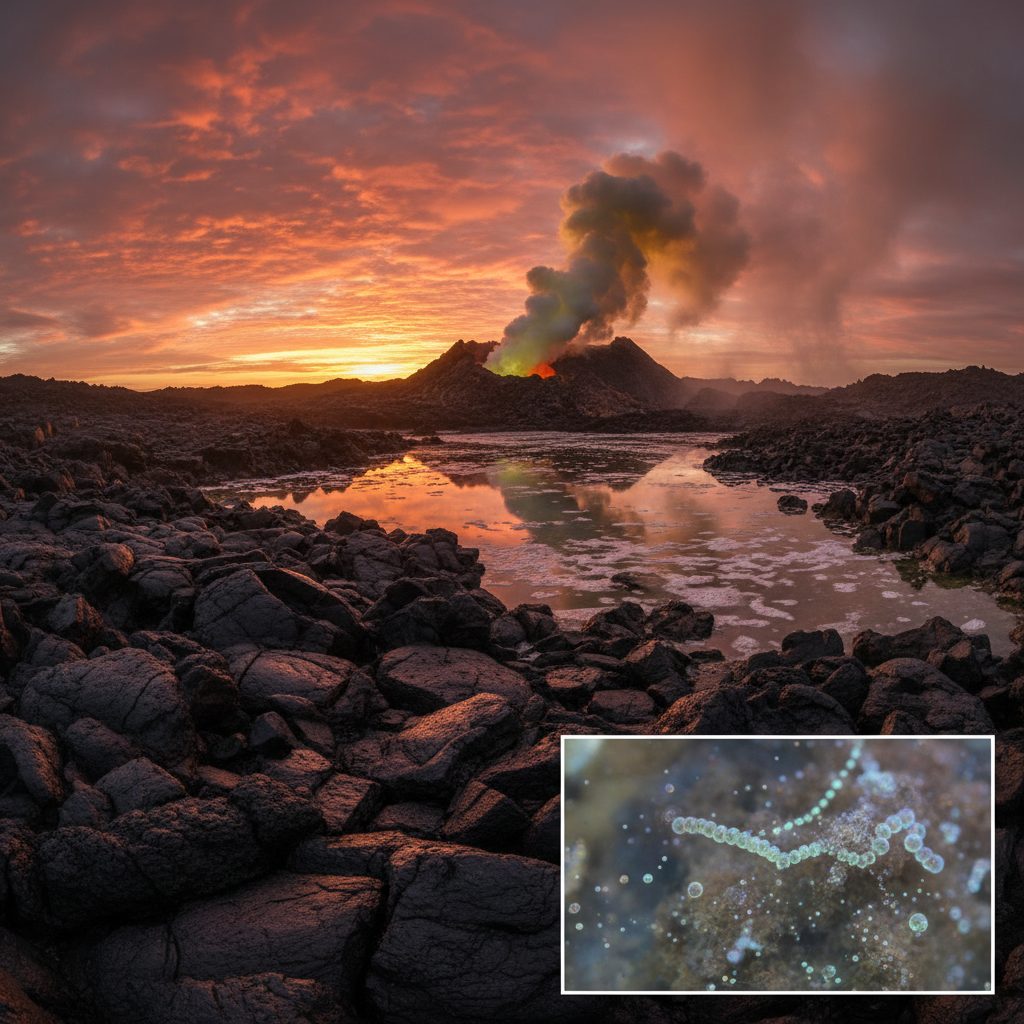
Earth four billion years ago was a hot mess. Intense UV radiation. Lightning. Volcanoes. Wild temperatures. Not a cute environment. But surprisingly, this chaos helped the formation of prebiotic peptides early Earth.
Here is what we know.
Scientists also discovered that carbamoyl amino acids may have been important helpers. These molecules could have boosted early peptide formation and supported the earliest chemical reactions.

Before ribosomes evolved, the planet had to rely on natural chemistry tricks. Luckily, early Earth had some clever options.
Experiments show that dripping amino acids onto hot rocks, clay, or sand can cause them to link together. Nature basically invented a messy pancake maker.
These were not smooth modern proteins. They looked more like tangled blobs. But even blobs can help speed up small reactions.
Some RNA molecules might have helped amino acids stick together. RNA was basically the first multitasker.
Minerals such as alpha alumina help amino acids bond into peptides. No enzymes needed.
These natural tricks show that prebiotic peptides early Earth were not only possible but likely common.
Over time, life slowly upgraded its molecular toolkit.
This transformation did not happen fast. It was more like slowly downloading a huge software update with bad Wi Fi.
But eventually, those simple early peptides led to modern enzymes, DNA, cells and everything alive today.
Here is the fun part.
Early life used what it had instead of waiting for perfect conditions. Honestly, that is pretty inspiring.
The story of prebiotic peptides early Earth is all about creativity in the middle of chaos. Even with a tiny supply of amino acids and no fancy machinery, early Earth managed to assemble the first building blocks of life.
This journey is one of the most incredible transitions in the history of the planet.
Got your own hidden peptide theory? DM me and let’s co author the next cosmic mystery.
What’s your hidden peptide pearl? DM me—let’s co-author the next unearthed epic. 🧪
All human research MUST be overseen by a medical professional