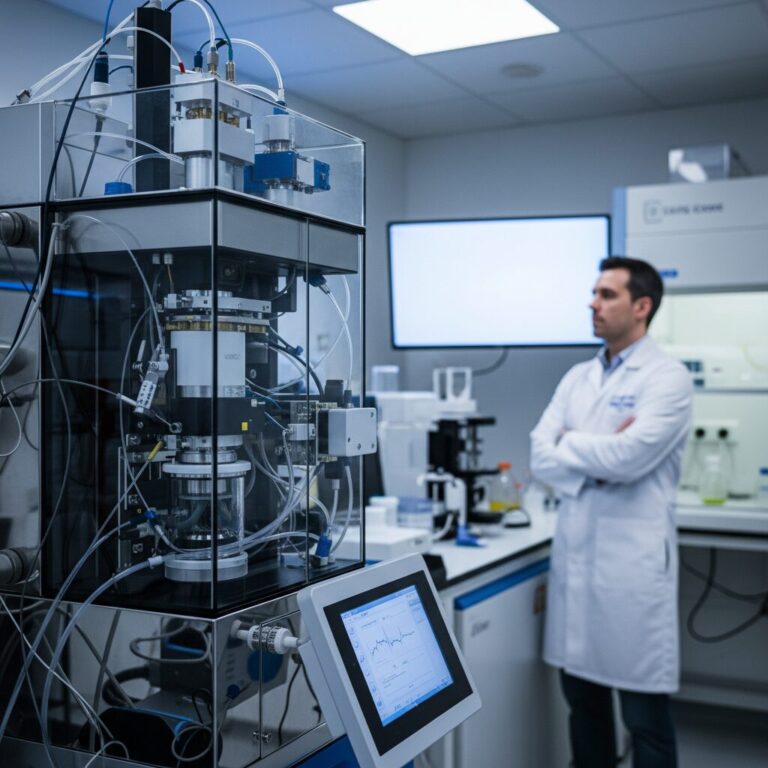
Hey, my peptide-powered pals! Kai Rivera here, your resident Chief Investigative Scribe at Peptides.today, ready to dive headfirst into another wild and wonderful world of science. Our bodies are doing that all the time! But instead of fingerprint dust and magnifying glasses, we’re talking about something called plasma proteomics.
Sounds fancy, right? Stick with me, because it’s basically like a high-tech treasure hunt for health clues hidden in your blood! You know that feeling when you’re watching a super-cool detective show, and they find that one tiny, almost invisible clue that cracks the whole case wide open? Well, guess what?
So, what’s the big deal? Imagine your blood isn’t just red stuff; it’s a living, breathing storybook of you. Every protein floating around in there is a word, a sentence, a whole paragraph about what’s going on inside your body. When something’s off maybe a sickness is brewing, or a new super-drug is working its magic those protein “words” change.
These changes are what we call biomarkers. Think of them as secret messages, tiny alarm bells, or even victory flags that tell doctors important stuff. Finding these biomarkers is super important for catching diseases early, understanding how treatments work, and generally keeping us all healthier.
But here’s the kicker: finding them isn’t like spotting a neon sign. It’s more like finding a single, perfectly camouflaged ladybug in a forest of a million leaves. That’s where technology swoops in, and boy, do we have some cool tech to talk about!
Okay, tangent time: let’s dive into the specifics, because that’s where the real magic happens, right?
So, scientists are always trying to find the best tools for this protein treasure hunt. It’s like debating whether to use a metal detector or a trained truffle pig – both are awesome, but they find different things in different ways, you know?
Recently, two big players in the biomarker detection game, HiRIEF LC-MS/MS and Olink Explore 3072, went head-to-head. And what did we find out? They’re both rockstars, but in their own unique ways! They have “complementary strengths,” which is a fancy way of saying they’re like Batman and Robin better together, each bringing their own superpowers to the fight.
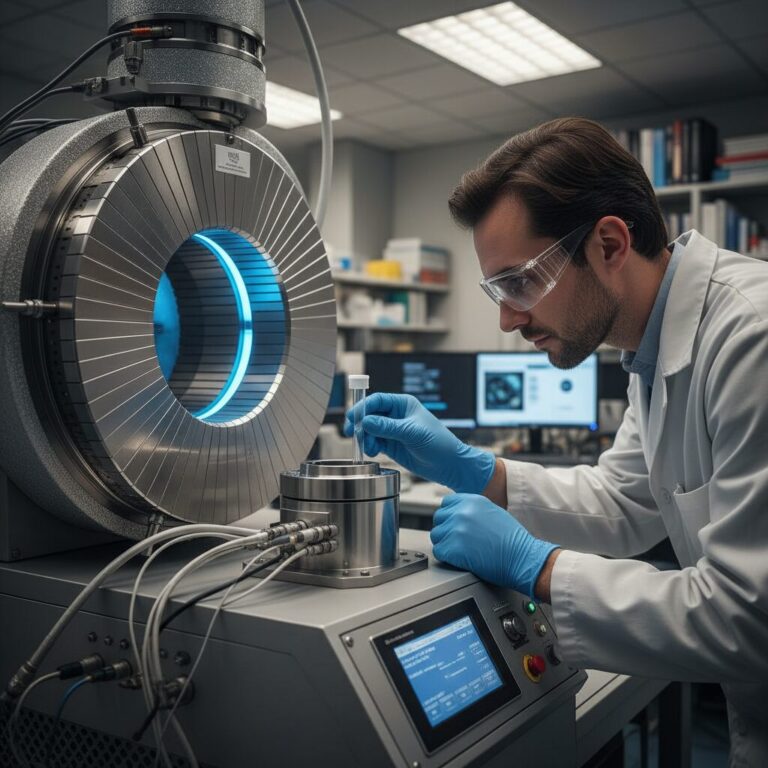
First up, let’s talk about HiRIEF LC-MS/MS. Don’t let the alphabet soup intimidate you! Think of this as the ultimate “wide net” fishing technique for proteins¹. It’s like casting a massive net into the ocean, trying to catch every single fish (or in our case, every tiny protein piece called a peptide) that swims by.
This method is super powerful because it doesn’t go in with a “most wanted” list. Instead, it just samples everything, then uses a super-sensitive scale (that’s the “MS/MS” part, short for mass spectrometry) to identify and measure all the different peptides it snagged.
It’s fantastic for discovering new biomarkers that we might not even know exist yet, because it’s not looking for anything specific it’s just looking for everything. It’s a “shotgun proteomics” approach, meaning it’s trying to catch it all and then piece the puzzle together later.
Then, we have Olink Explore 3072. This one is more like a highly specialized, laser-focused search party². Instead of catching everything, Olink comes equipped with a huge library of super-specific “wanted posters” for over 3,000 known proteins.
It uses tiny molecular “buddies” called antibodies that are designed to stick only to their target protein, like a key fitting a very specific lock. This means it can quickly and accurately measure the levels of a lot of specific proteins all at once.
It’s incredibly efficient for checking on proteins we already suspect are involved in a disease or biological process. It’s like having a super-fast police sketch artist working through a huge database of known suspects boom, boom, boom!

So, what happens when you compare the data from these two powerful tools? Well, they found a “moderate quantitative agreement.” What does that even mean? Basically, while both are great at telling us which proteins are around and how much of them there are, they don’t always give the exact same numbers.
It’s like two different scales weighing the same apple one might say 150 grams, the other 148. Both are close, both are right in their own way, but they’re not identical. This isn’t a bad thing; it just tells us that each platform has its own way of seeing the world, and combining their insights gives us an even clearer picture.
Continued cross-platform evaluations are super important as these technologies keep getting better, giving us even deeper insights into disease and improved biomarker discovery¹.
Now, because these different platforms have their own quirks and ways of measuring, making sense of all that data can feel like trying to read ancient hieroglyphs after a five-hour energy drink binge. That’s where PeptAffinity waltzes in, looking like the hero we didn’t know we needed! This super cool resource is like your personal universal translator for peptide data³.
Imagine you’ve got tons of tiny peptide puzzle pieces from both the HiRIEF “wide net” and the Olink “wanted poster” approaches. PeptAffinity helps us map all those peptides back to their parent protein sequences. It’s not just about saying, “Yep, that’s a piece of Protein X.”
It also digs into the details, like figuring out if it’s a specific version of Protein X (called an isoform) or if it has special features. This is huge because sometimes, subtle differences in these protein versions can be the very clues that point to a health issue.
PeptAffinity helps researchers really get into the nitty-gritty, exploring those differences in protein amounts between the platforms at a super detailed, peptide level. It helps us understand why the numbers might be a little different and gives us a more complete story. It’s basically the ultimate “compare and contrast” tool for our protein detective work!
You might be thinking, “Okay, Kai, this is cool tech talk, but what’s the real-world impact?” And that’s a totally fair question!
All this super detailed work with plasma proteomics, HiRIEF, Olink, and PeptAffinity is ultimately about one thing: making us healthier.
Finding biomarkers helps us:
It’s all about getting clearer, more accurate clues from our blood, faster than ever before. The more precisely we can measure and understand these tiny protein signals, the better equipped we are to tackle health challenges. It’s a continuous adventure, and these technological advancements are truly making a difference in the quest for better health outcomes for everyone.
So, next time you hear “plasma proteomics,” think of it as a thrilling, high-stakes treasure hunt, and these scientists? They’re the intrepid adventurers, using the coolest gadgets to find those hidden health pearls!
What’s your hidden peptide pearl? DM me let’s co-author the next unearthed epic. 🧪
Branca RMM et al. HiRIEF LC-MS enables deep proteome coverage and unbiased proteogenomics. Nature Methods (2014). Nature+1
Olink® Explore 3072/384. Product overview page (accessed Nov 2025). Olink®
Sissala N, Babačić H, Leo IR, … Pernemalm M. Comparative evaluation of Olink Explore 3072 and mass spectrometry with peptide fractionation for plasma proteomics. Communications Chemistry (Nature Portfolio), Nov 2025. Nature
All human research MUST be overseen by a medical professional.