If you have ever wondered about peptides vs proteins vs enzymes, you are not alone. These three terms show up everywhere in biology, fitness, skincare, and research. Yet most people are not quite sure how they differ or why they matter. Think of this article as your friendly tour through the molecular city running inside your body. By the end, the confusion melts away and the science starts to feel surprisingly intuitive.
Your body is a busy metropolis made of trillions of cells. Inside each cell, countless reactions happen every second. Peptides, proteins, and enzymes are the tiny workers that build structures, send signals, and speed up chemical reactions. They overlap, they collaborate, and they make life possible.
Understanding peptides vs proteins vs enzymes is more than trivia. It helps explain how medicines work, how muscles grow, how digestion happens, and how modern biotech research is evolving.
To start, let us clear up the biggest confusion. These three are not completely separate categories.
So yes, they overlap. Think of proteins as the big family, peptides as the smaller members, and enzymes as the specialized workers within that family.
Proteins are the primary building blocks and functional molecules of life. Every cell in your body is packed with them. Hair, skin, blood, muscles, immune defenses, and hormones all depend on proteins.
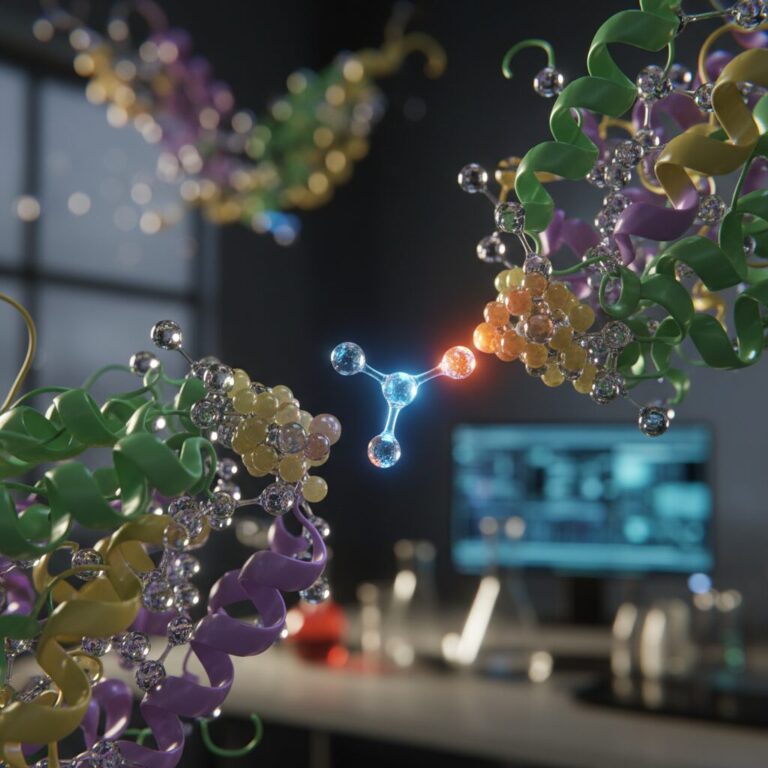
Proteins are made from amino acids. Scientists often compare amino acids to beads on a string. When hundreds or thousands of beads link together, they form a long chain. This chain folds into a precise 3D shape. That shape determines what the protein does.
Your genome contains about twenty thousand protein coding genes. However, those genes can produce hundreds of thousands of proteins through processes like alternative splicing and chemical modifications. That means your body has an enormous toolkit of molecular machines.
Some proteins carry oxygen in the blood. Others build tissue. Some send signals between cells. Many act as defense molecules that protect against pathogens. In short, proteins are the infrastructure and workforce of the human body.
If you want to learn more about amino acids, you can explore resources from the National Human Genome Research Institute.
Protein shape determines function. If the folding process fails, the protein cannot do its job. In some diseases, misfolded proteins accumulate and disrupt normal cell activity. This is one reason why protein research is such a major focus in biotechnology and medicine.

Now let us focus on the enzyme part of peptides vs proteins vs enzymes.
Enzymes are biological catalysts. A catalyst speeds up a chemical reaction without being consumed in the process. Without enzymes, many reactions in the human body would occur far too slowly to sustain life.
For example, digestion depends heavily on enzymes. The food you eat must be broken down into small molecules before your body can use it. Without digestive enzymes, this process would take years instead of hours.
Enzymes can accelerate reactions thousands or even millions of times faster than they would happen naturally. That speed is essential for life.
Most enzymes are proteins. However, scientists discovered in the early 1980s that some RNA molecules can also act as catalysts. These molecules are called ribozymes. This discovery reshaped how scientists define enzymes and earned a Nobel Prize in Chemistry.
If you want a simple explanation of enzymes as catalysts, Khan Academy has an excellent educational overview.
Ribosomes are molecular factories that build proteins. Interestingly, ribosomes contain both RNA and proteins. This shows how interconnected biological systems truly are. Proteins help build the machines that build more proteins.
Now we reach the peptide side of peptides vs proteins vs enzymes.
Peptides are short chains of amino acids. There is no strict universal cutoff, but many scientists consider molecules with fewer than fifty amino acids to be peptides.
Because they are smaller, peptides often act as signaling molecules. They deliver instructions between cells and tissues. Many hormones are peptides.
Examples include insulin, which regulates blood sugar, and oxytocin, which plays a role in bonding and social behavior.
Researchers are interested in peptides because they can interact with biological systems very precisely. Their smaller size makes them attractive for drug development. However, many peptides break down quickly in the body and often require specialized delivery methods.
Peptide therapeutics is a rapidly growing field in biotechnology. You can read more about peptide drug research through PubMed and Nature reviews.
You may see research peptides discussed online. It is important to understand that many of these compounds are experimental and not approved for medical use. Quality control and clinical oversight are essential in any human research setting.
Understanding peptides vs proteins vs enzymes helps people avoid misinformation and approach research responsibly.
Learning the differences between peptides, proteins, and enzymes gives you a deeper understanding of how biology works. It explains how medications target specific pathways. It also explains how new therapies are being developed.
Researchers study peptides for roles in tissue repair, inflammation, and neurological function. Many of these studies are preclinical or experimental. This is an active and evolving area of science.
Proteins continue to be central to diagnostics, vaccines, and biotechnology. Enzymes remain critical in medicine, food production, and industrial processes.
Instead of thinking about peptides vs proteins vs enzymes as competitors, think of them as collaborators.
Together, they create the chemistry that powers every breath, blink, and heartbeat.
Biology becomes far less mysterious when you understand the molecular team working behind the scenes. These molecules are not abstract science terms. They are the foundation of life.
From muscle growth to digestion to immune defense, peptides, proteins, and enzymes keep the body running smoothly. Their partnership is one of the most fascinating stories in science.
All human research MUST be overseen by a medical professional.