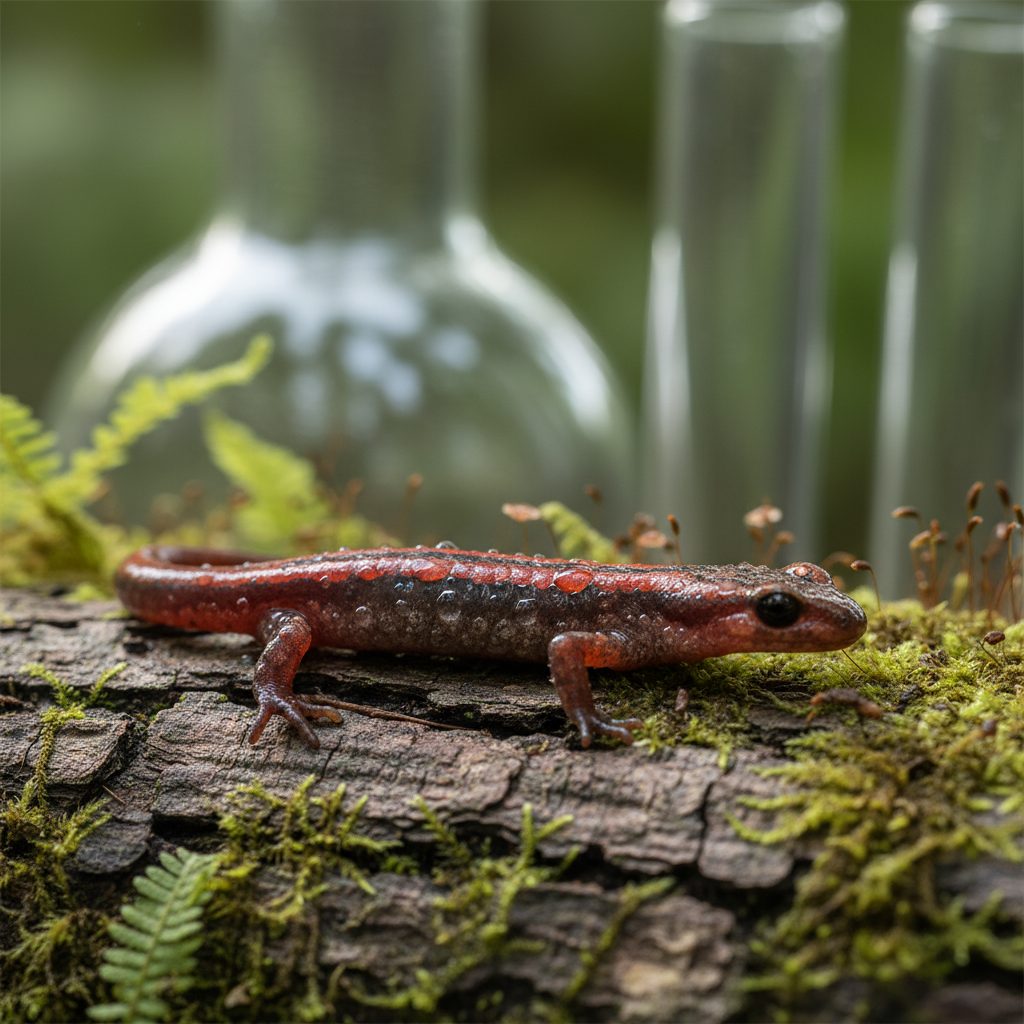
The global health community is searching urgently for new solutions to antimicrobial resistance. The discovery of Appalachian salamander cathelicidins offers an exciting starting point for a new class of antimicrobial therapies.
Antimicrobial resistance (AMR) is responsible for an estimated 1.27 million deaths each year and associated with nearly 5 million deaths globally according to the World Health Organization. These numbers continue to grow, so the need for new therapeutics is critical.
The ESKAPEE group of pathogens, which includes Enterococcus faecium, Staphylococcus aureus, Klebsiella pneumoniae, Acinetobacter baumannii, Pseudomonas aeruginosa, Enterobacter species, and Escherichia coli, represents the most urgent group of bacteria for new treatment development.
These organisms are responsible for severe and often deadly infections that no longer respond to many existing antibiotics.
Recent research on natural antimicrobial peptides extracted from Appalachian salamanders has revealed two promising candidates. These peptides, known as Pcin CATH3 and Pcin CATH5, showed measurable activity in laboratory testing against three major human pathogens.
Since these pathogens include Acinetobacter baumannii, Pseudomonas aeruginosa, and Escherichia coli, which frequently appear in hospital acquired infections, the discovery has significant scientific and clinical importance.
While the work is at a very early preclinical stage, the findings support the idea that natural defensive molecules in wildlife may offer new directions for future antibiotic development.

Scientists studied the skin of Appalachian salamanders and used transcriptomics and proteomics to investigate antimicrobial peptides in multiple species. The research revealed more than two hundred possible antimicrobial peptide candidates.
The most common peptide group found was the cathelicidin family. These molecules are part of the immune defense that salamanders use to protect their skin from microbes in their natural environment. The study demonstrated a complex connection between the salamander immune system and the skin microbiome, which helps maintain microbial balance.
To explore practical applications, researchers synthesized twenty peptide candidates and tested them against a range of fungal and bacterial organisms.
While there was limited activity against the Bd fungal pathogen that threatens amphibian populations, two cathelicidins showed inhibitory effects against a set of high priority human pathogens. These were Pcin CATH3 and Pcin CATH5, both derived from the salamander species Plethodon cinereus.
Activity against Acinetobacter baumannii and Pseudomonas aeruginosa is especially encouraging. Both pathogens are frequently resistant to powerful antibiotics and are difficult to eradicate in hospital and ventilator associated infections.
These infections can lead to sepsis, pneumonia, bloodstream infection, and high mortality. Because of this clinical importance, the potential therapeutic value of Appalachian salamander cathelicidins is now attracting attention in the antimicrobial research community.
Cathelicidins typically work by disrupting bacterial cell membranes. Unlike traditional antibiotics that target precise metabolic processes or structural pathways, membrane disruption affects the bacteria broadly.
As a result, resistance can develop more slowly compared to narrow mechanism antibiotics. However, bacteria can still adapt over time through membrane remodeling, biofilm reinforcement, and enzyme activity. Therefore, research teams plan to study the long term risk of resistance closely.
Many companies and research institutions are exploring antimicrobial peptides for their ability to target multidrug resistant strains. Although the concept is promising, many AMP candidates struggle with stability in the human body, potential toxicity, and delivery challenges.
Past attempts to turn cathelicidins into systemic drugs have seen mixed results because peptides often break down quickly, and high doses may harm healthy tissues. For these reasons, the transition from laboratory success to pharmaceutical product requires careful optimization.
At present, Appalachian salamander cathelicidins are at the earliest stage of discovery and have only demonstrated in vitro results. There are currently no animal model infection studies published and no human trials initiated. The next steps focus on lead optimization, toxicology studies, serum stability assessment, and formulation development.
The regulatory pathway for antimicrobials includes multiple phases. First, researchers complete preclinical studies on safety, toxicity, pharmacokinetics, and animal model performance. After this stage, researchers may apply for approval to begin Phase 1 clinical trials in healthy volunteers to test basic safety.
Phase 2 trials test dosing and early efficacy in patients. Phase 3 trials test treatment impact in large populations. Once clinical testing is complete, regulators review all evidence before approval.
For severe and resistant infections, the United States FDA provides incentives such as the Qualified Infectious Disease Product designation. This designation offers priority review and fast track status, plus additional market exclusivity if a drug receives approval.
If future studies support progression, Appalachian salamander cathelicidins may become candidates for these pathways. However, this will require years of data to support safety and effectiveness.
A realistic timeline for a discovery stage antimicrobial to reach the market can range from ten to fifteen years. Research costs often exceed hundreds of millions of dollars. Many candidates fail due to toxicity, inadequate efficacy, or manufacturing challenges. Therefore, scientific excitement must be accompanied by caution, patience, and further experimentation.
In the short term, work will focus on laboratory testing and structural refinement. Researchers must improve stability in human cells, explore delivery options, and identify the right therapeutic window.
Detailed mechanism of action studies will help determine how Pcin CATH3 and Pcin CATH5 interact with bacterial membranes and whether resistance develops during long term exposure. The ability to maintain potency in the presence of human serum is a major priority.
In the long term, if safety and efficacy are demonstrated, Appalachian salamander cathelicidins could become part of a new strategy in antimicrobial drug development. Novel antimicrobial peptides could play a role in treating infections for which few options remain.
Their ability to act against multidrug resistant ESKAPEE pathogens makes them a compelling research direction. However, there is a long journey from laboratory findings to real clinical treatments. It will require collaboration between academic researchers, pharmaceutical partners, regulatory agencies, and investors.
Even though the discovery is at the beginning, the work represents a creative and hopeful approach to solving one of the largest modern health threats. Further research will show whether these peptides can evolve into real medicines for the future.
• WHO Antimicrobial Resistance Overview:
https://www.who.int/news-room/fact-sheets/detail/antimicrobial-resistance
• WHO Update on Priority Pathogens:
https://www.who.int/news/item/17-05-2024-who-updates-list-of-drug-resistant-bacteria-most-threatening-to-human-health
• NPJ Biofilms and Microbiomes Study on Appalachian Salamander Peptides:
https://www.nature.com/articles/s41522-025-00837-0
Stay ahead of the clinical curve—the next great peptide is already in Phase 2. 💊
All human research MUST be overseen by a medical professional