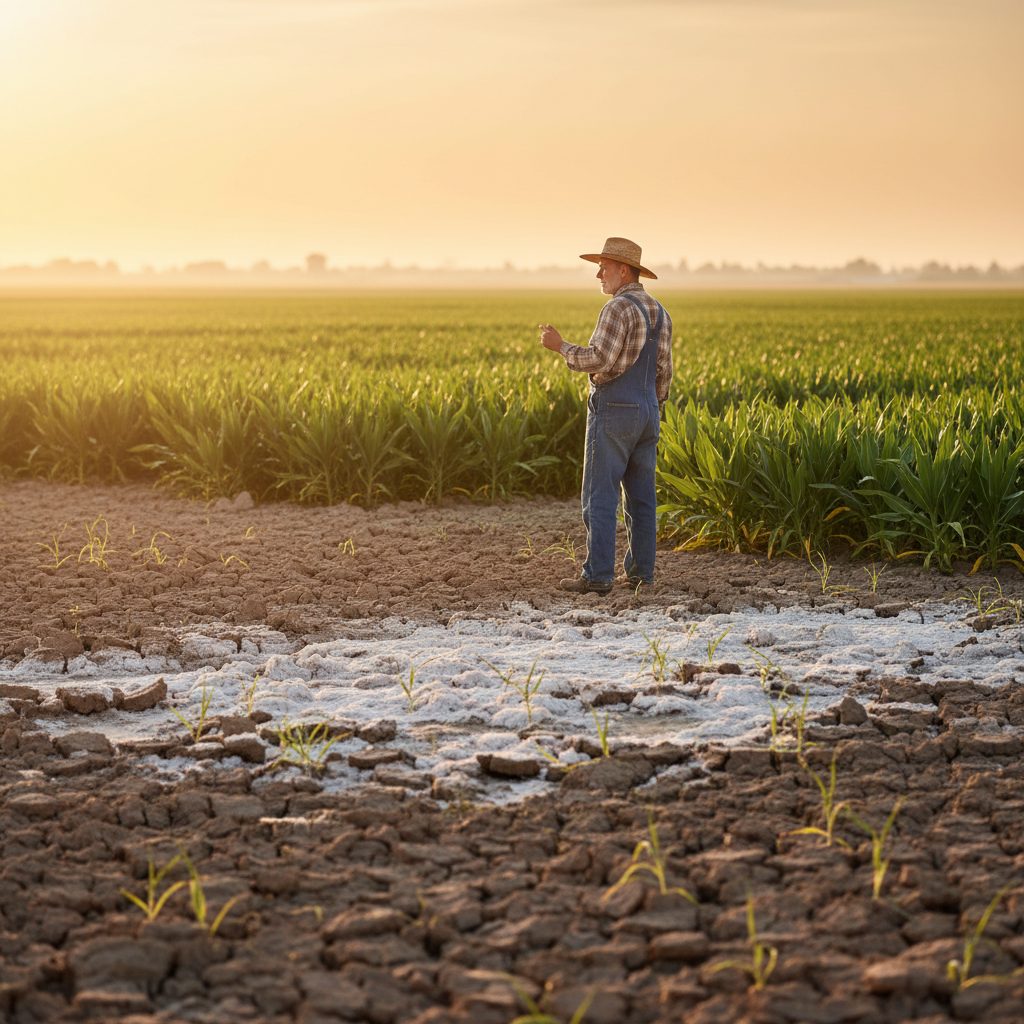
Every farmer knows the feeling: watching the sky for rain that never comes, or seeing the field turn white with salt creep. Drought and salty soil aren’t just headaches; they’re direct hits to your bottom line, stealing away yield and forcing you to spend more just to keep up. What if there was a way to help your crops stand taller, grow stronger, and fight back against these stresses, all while putting more money in your pocket? We’re not talking about magic, but about getting smarter with nature’s own tiny powerhouses: Smart Peptides.
These little biological messengers are showing real promise, acting like natural defense coaches for your plants, helping them maximize growth and yield even when conditions are tough.
You know, the idea of tiny molecules making a big difference might sound like something out of a science fiction novel, but it’s actually a practical tool, ready for the field. We’ve seen how a well-maintained tractor runs better, right? Well, think of these peptides as fine-tuning your plants’ internal engines, making them more efficient and resilient.
Moving past the “what” and into the “how,” it’s time to understand exactly how these peptides are doing their work. Just like a good combine harvester has many intricate parts working together, a plant has complex systems.
Smart Peptides are like the skilled mechanics, making sure everything runs smoothly, especially when things get rough.
At its core, a peptide is just a short chain of amino acids, much smaller than a full protein. Think of them as miniature instructions or signals that plants use to communicate within their own systems. These signals tell the plant what to do, how to grow, and how to react to what’s happening around it.
They’re critical for everything from root development to flower production¹. More specifically, there are special groups of Smart Peptides, called CLE peptides, that are known to play huge roles in how a plant develops and how it handles tough weather, like dry spells or sudden temperature changes².
Now, let’s talk about specific results that matter on the farm. Recent research has shined a light on a particular Smart Peptides called SmCLE25. This peptide, naturally found in plants, acts like a master switch for stress defense. When your crops face drought or high salt levels, SmCLE25 kicks into high gear.
What does it do? It delays leaf senescence, which is just a fancy way of saying it keeps the leaves greener and working longer. This means your plants have more time to gather sunlight and produce energy, even when water is scarce or the soil is too salty¹.
Imagine your irrigation system. When the well runs low, you want every drop to count, right? SmCLE25 works in a similar way, making sure the plant uses its resources efficiently and doesn’t “give up” too early. It essentially tells the plant, “Hold on, we can get through this!”
Overexpression of this peptide in model plants has shown a clear delay in leaf aging and a big jump in drought resistance¹. It’s like giving your most vulnerable young livestock a natural immunity boost before a tough winter.

Here’s the real kicker: we’ve figured out how it does this. When plants are stressed, they build up something called “reactive oxygen species” (ROS). Think of ROS as internal rust in the plant’s machinery. Too much rust, and the plant starts to break down.
SmCLE25 steps in and actually dials down the genes responsible for making this “rust” (specifically, genes named RbohC and RbohE). Less rust means less damage, and a healthier plant overall¹.
This isn’t just academic talk; it’s about tangible farm benefits. A plant that resists drought and salt stress longer means:
Getting a good stand is half the battle, especially in tough conditions. If your seeds struggle to sprout in salty soil or dry conditions, you’re already behind. Another incredible finding is that higher levels of SmCLE25 peptide also improve seed germination efficiency when facing salt and drought challenges¹.
Picture this: you’ve planted your seeds, and now it’s a race against time and conditions. If those seeds can pop up faster and stronger despite the odds, you’ve got a massive advantage.
It’s like having your calves born with an extra layer of protection, allowing them to thrive even if the spring weather turns nasty. This early advantage means a more uniform stand, reducing the need for costly replanting and giving every plant the best chance to mature.
While SmCLE25 shows incredible promise for drought and salinity, the world of agricultural peptides is much wider. Scientists are looking at other peptides for a whole range of uses. Some act as natural plant growth regulators, helping plants grow bigger and stronger.
Others are being explored as antimicrobial agents, helping plants fight off diseases naturally, or even as natural insecticides and herbicides³. Think of it like adding more specialized tools to your farm’s shed – not just a single wrench, but a whole set designed for every challenge.
The reality is, a vast majority of farmland worldwide grapples with “abiotic stress” things like extreme temperatures, water scarcity, and salinity all of which slash agricultural yields significantly⁴. Peptides offer a precise, natural way to help plants navigate these challenges, maximizing their inherent ability to thrive.
The evidence is clear: leveraging the power of peptides offers a fresh approach to some of agriculture’s oldest problems. By helping plants naturally resist environmental stresses like drought and salt, we can improve germination, reduce crop loss, and ultimately, put more profit back into your pocket.
This isn’t just about growing crops; it’s about growing smart, ensuring your fields are productive and your farm remains profitable for generations to come. It’s about letting the latest science work hand-in-hand with your hard-earned farming wisdom.
Grow smarter, not harder. Let the molecules do the work. 🌱
All human research MUST be overseen by a medical professional