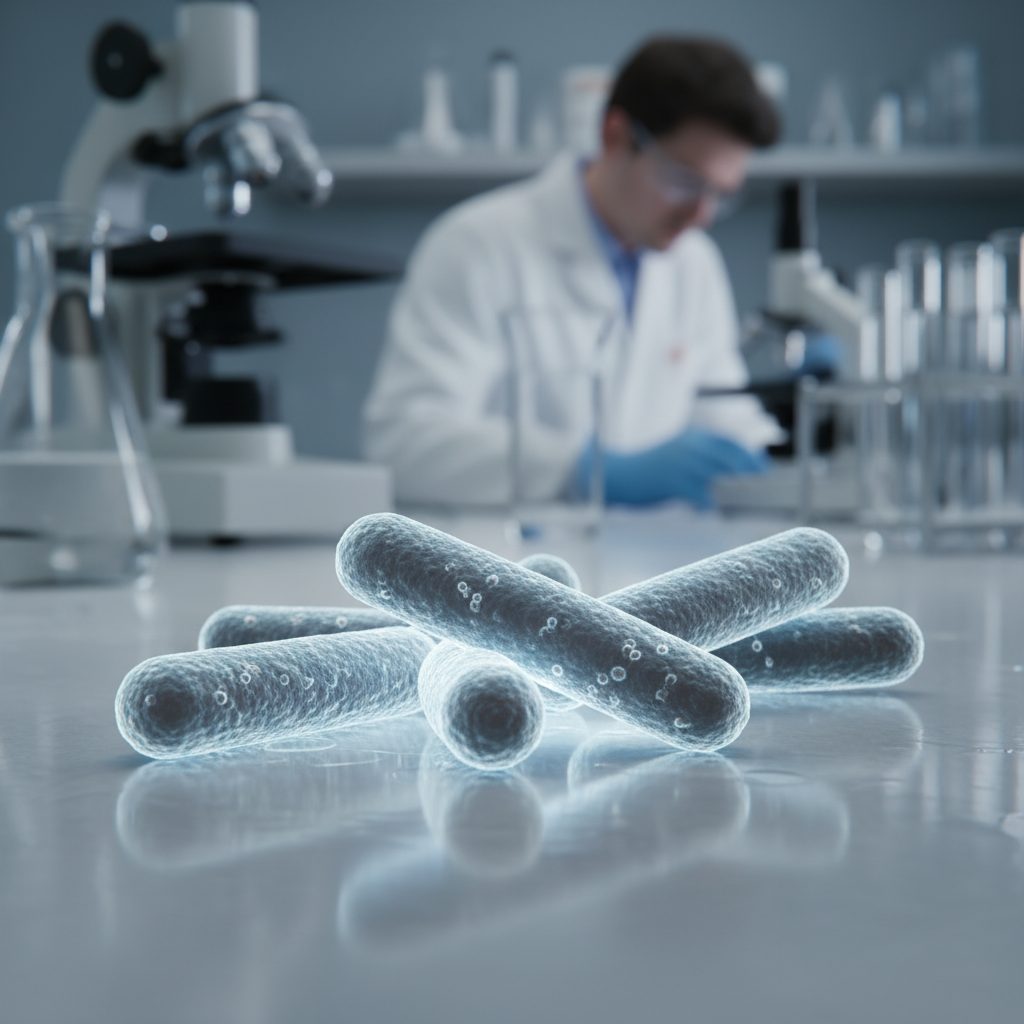
Alright, science sleuths and curious comrades, buckle up for a fun ride into microbiology. Today we are exploring the amazing world of Bacillus subtilis, a small yet mighty bacterium that scientists love to work with.
This microbe looks simple, but in reality it works like a full biotech factory. When it secretes proteins, it does it with impressive efficiency.
So what makes Bacillus subtilis such a superstar in the scientific community? To understand this, we need to explore its secretome, which is the complete set of proteins it releases into its environment.

The secretome of Bacillus subtilis is similar to a complete playlist of exported proteins. This gram-positive bacterium releases a wide collection of enzymes and biologically active molecules. Since it lacks an outer membrane, it can push proteins out more easily compared to many other bacteria.
Industries appreciate Bacillus subtilis because its secreted proteins support a wide range of applications in enzyme production, pharmaceuticals, food processing, and cleaning products.
In the late 1990s, scientists sequenced the Bacillus subtilis genome. This genome map became the ultimate cheat code for researchers. They suddenly knew which genes created secreted proteins and which pathways those proteins used to exit the cell.
This breakthrough revealed four major secretion pathways and roughly 300 proteins predicted to be exported.
To appreciate the power of Bacillus subtilis, we need to explore the four routes it uses to export proteins. These routes function like specialized highways inside the cell.
The Sec pathway is the busiest protein export system in Bacillus subtilis. Proteins that take this route begin with a signal peptide, which acts as a short amino acid tag that says, “ship me out.”
Because this pathway carries most secreted proteins, it remains vital for industrial use.
Unlike the Sec pathway, the Tat pathway exports proteins that are already folded. It recognizes a twin arginine motif in the signal peptide. This system becomes important for enzymes that must keep their three dimensional shape while traveling outside the cell.
This export system helps Bacillus subtilis build tiny filament-like structures called pili. When the bacterium enters a state known as competence, it uses these pili to collect DNA from its environment. This ability allows it to improve its genetic capabilities, which is a remarkable skill among microbes.
ABC transporters act like small cargo trucks powered by ATP. They move many different molecules across the membrane. While many ABC systems import nutrients, several of them help export proteins. Their flexibility makes them crucial for the broader secretome of Bacillus subtilis.
Every exported protein begins with a signal peptide. This short sequence tells the cell which pathway the protein should follow. These tags determine whether a protein travels through the Sec pathway, the Tat pathway, the prepilin route, or the ABC transporters.
This GPS-like system keeps the busy cellular world of Bacillus subtilis organized and efficient.
Understanding how Bacillus subtilis exports proteins allows scientists to design better production strains. These optimized strains can create the following items.
Because Bacillus subtilis naturally secretes many proteins, improving its secretome can boost production yields and lower manufacturing costs.
Bacillus subtilis is much more than a common soil bacterium. It is a master of protein logistics. It uses four unique secretion systems to export hundreds of valuable proteins. Thanks to its sequenced genome, scientists can now fine tune it for biotechnology, medicine, and industrial innovation.
If you enjoy learning about microbes that deliver powerful results, Bacillus subtilis deserves a top spot on your list.
All human research MUST be overseen by a medical professional