Pharmaceutical

Home » Pharmaceutical » Page 9
Pharmaceutical

Revolutionizing Antimicrobial Peptide Discovery: Assessing the Clinical Viability Impact of CG-AMP

Sonia Rao
December 1, 2025

Antibiotic resistance continues to grow at a pace that outmatches current drug development methods. Researchers estimate that resistant infections may cause up to 10 million deaths per year by 2050 if new therapeutics do not emerge. The race is not just urgent. It is personal for every clinician, researcher, and policymaker working to prevent a post-antibiotic era. One promising direction is CG-AMP antimicrobial peptide discovery.

Antimicrobial peptides, or AMPs, have become a strong candidate class because they show broad activity against bacteria, fungi, and viruses. They often damage pathogens through membrane disruption, which reduces the likelihood of resistance compared to traditional antibiotics.

However, identifying and optimizing AMPs takes time, funding, and extensive laboratory screening. That is why advanced computational frameworks such as CG-AMP are beginning to reshape the landscape. These tools accelerate discovery and help researchers evaluate which peptides are most likely to succeed in preclinical and clinical testing.

Accelerated AMP Preclinical Discovery

Why CG-AMP Antimicrobial Peptide Discovery Matters Right Now

Traditional AMP discovery methods rely on wet lab screening. This process is slow, expensive, and inefficient when facing fast-evolving pathogens. AMPs vary in structure, length, charge, and stability. Without predictive tools, researchers sort through thousands of sequences before finding promising candidates.

CG-AMP antimicrobial peptide discovery helps solve this bottleneck. Instead of screening every peptide manually, CG-AMP predicts which candidates have the highest chance of antimicrobial activity and safety. This approach brings machine learning into early drug discovery and gives researchers a head start before laboratory validation begins.

Transitioning from random search to intelligent prioritization is not just innovative. It is necessary to keep pace with superbugs and reduce early-stage drug failure.

How CG-AMP Works

CG-AMP is a deep learning framework built to analyze peptide sequences at scale. The model has two key modules. Each supports antimicrobial prediction from a different perspective.

Module 1: Language Model and Contrastive Learning

Protein and peptide sequences behave like structured language. Each amino acid represents a token and each pattern contributes meaning. CG-AMP uses a pre-trained language model to understand this structure. It learns the biological grammar behind effective antimicrobial peptides.

Contrastive learning improves this process by teaching the model to distinguish between real AMPs and non-effective peptides. This helps the system focus on meaningful patterns rather than memorizing training examples.

Module 2: Enhanced Convolutional Neural Network

The second module uses an enhanced convolutional neural network to find detailed sequence patterns. CNNs are known for recognizing spatial signals in images. In this context, CNNs detect biochemical motifs, charge patterns, and structural elements essential for AMP function.

By combining both modules, CG-AMP creates a strong feature representation. The system analyzes peptides from multiple angles and produces prediction outputs that are more accurate than earlier models.

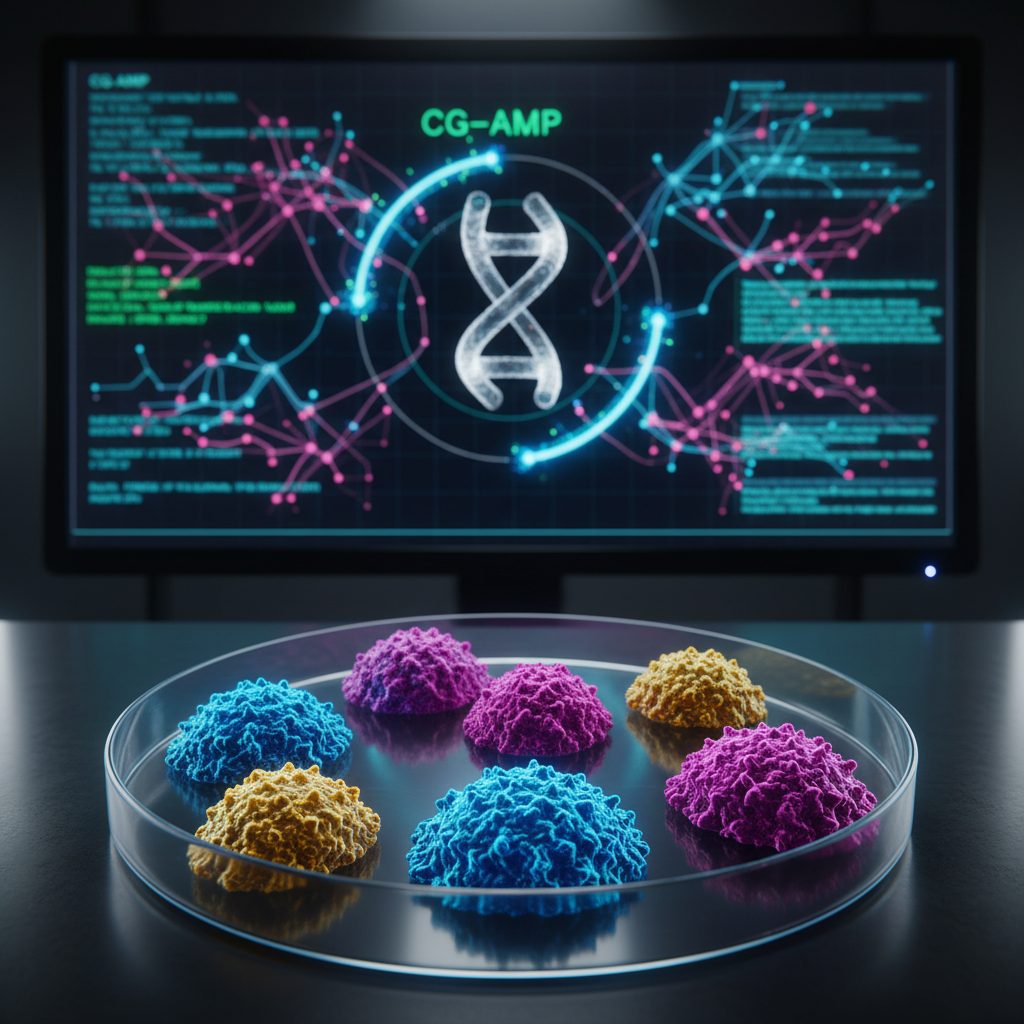
CG-AMP Deep Learning Workstation

Measured Performance of CG-AMP

CG-AMP was evaluated using two benchmark test sets. The results demonstrate high accuracy and consistency:

DatasetAccuracyF1 ScoreMCC
AMPlify Test Set0.94970.95080.8994
DAMP Test Set0.94030.93920.8812

A high Matthew’s Correlation Coefficient signals balanced predictions for both positive and negative samples. This reduces costly experimental false positives.

These results place CG-AMP among the strongest computational screening tools available for AMP identification.

Clinical Relevance of CG-AMP Antimicrobial Peptide Discovery

CG-AMP itself is not a therapeutic agent. Instead, it supports the drug discovery process by improving the efficiency of selection and optimization. Early drug development is the most expensive and uncertain phase. Many candidates fail because they lack potency, stability, or safety.

Using CG-AMP antimicrobial peptide discovery can:

  • Reduce the number of unnecessary experiments
  • Prioritize high-potential peptide families
  • Support mechanistic research
  • Help identify peptides active against resistant pathogens
  • Shorten the time between concept and preclinical trials

This efficiency is valuable because regulators such as the FDA and EMA increasingly support computational models within submissions. Predictive modeling can strengthen the scientific rationale for proceeding to in vivo testing and reduce uncertainty during Investigational New Drug filings.

Regulatory Landscape and Timeline Considerations

Computational workflows are gaining acceptance in regulated industries. Agencies encourage model-informed development when supported by evidence. Although CG-AMP does not replace biological testing, it can complement it by improving candidate quality early in the timeline.

For example, if CG-AMP predicts that a peptide has properties suitable for targeting multidrug-resistant bacteria, those data can support applications for:

  • Fast track designation
  • Orphan drug status
  • Priority review

These pathways may significantly shorten development timelines for life-saving antimicrobial products.

The Road Ahead for AMPs and CG-AMP

The pipeline of traditional antibiotics is shrinking. At the same time, global demand for new antimicrobial categories is rising. AMPs offer potential benefits including immune modulation, synergy with existing antibiotics, and reduced resistance.

CG-AMP antimicrobial peptide discovery may help identify new peptide families suitable for clinical translation. As more datasets become available, deep learning models will continue to improve. With time, these tools may predict toxicity, stability, and pharmacokinetics, not just antimicrobial activity.

In the short term, CG-AMP will likely introduce more validated AMP candidates into early research pipelines. In the long term, it may accelerate the next generation of antimicrobial drugs that reach clinical trials and patient use.

Final Thoughts

The future of antibiotic development depends on speed, accuracy, and innovation. CG-AMP antimicrobial peptide discovery is part of a growing transition from traditional biology to computationally assisted research. It reduces discovery uncertainty and enables smarter prioritization in an area where every month counts.

The next breakthrough antimicrobial may not be found in a petri dish. It may begin as a predicted sequence in a machine learning model and reach patients faster because of it.

The science is accelerating. The world is watching. And CG-AMP is helping lead the way.

Stay ahead of the clinical curve—the next great peptide is already in Phase 2. 💊

References

  1. O’Neill, J. (2016). Tackling drug-resistant infections globally: final report and recommendations. The Review on Antimicrobial Resistance.
  2. U.S. Food and Drug Administration. (2023). Advancing Regulatory Science for Drug Development. Retrieved from https://www.fda.gov/drugs/regulatory-science-research-and-development/advancing-regulatory-science-drug-development
  3. European Medicines Agency. (2022). Guideline on the clinical development of medicinal products for the treatment of bacterial infections. Retrieved from https://www.ema.europa.eu/en/documents/scientific-guideline/guideline-clinical-development-medicinal-products-treatment-bacterial-infections-revision-1_en.pdf

All human research MUST be overseen by a medical professional

Pharmaceutical

Biocon’s Strategic Consolidation: A Bold Play in the ‘Diabesity’ Market

Sonia Rao
December 18, 2025

As the pharmaceutical landscape shifts, Biocon is making decisive moves to solidify its leadership in the diabesity sector. The announced $5.5 billion merger of its biosimilars division, Biocon Biologics, back into the parent organization is a strategic maneuver. It’s designed to streamline operations and enhance global market presence in critical therapeutic areas: diabetes care, and immune therapies. This integration is poised to establish Biocon as a formidable biopharma powerhouse. Directly addressing market inefficiencies and leveraging a unified portfolio of biosimilars, insulins, GLP-1 peptides, and complex generics¹.Honestly, I think this is a pretty smart move. Biocon’s major structural shifts signals a serious commitment to competing on a global scale. 

The Clinical Hook: Addressing a Global Health Crisis

Diabetes and obesity, often referred to as “diabesity,” represent one of the most significant public health challenges of our time. Analysts project the global diabetes and obesity drug market will generate hundreds of billions in annual revenue. Driven by rising prevalence rates and an increasing understanding of the interconnected pathologies. Biocon’s biosimilar insulin and generic GLP-1 portfolio positions its consolidated entity to capture significant market share. This isn’t just about market share; it’s about providing more accessible treatment options for millions of patients worldwide, which, let’s be real, is a huge win.

Clinical Snapshot: Biocon’s Diabesity Focus

  • Target Indications: Type 1 and Type 2 Diabetes, Obesity
  • Key Therapeutic Areas: Biosimilar Insulins, GLP-1 Peptides, Complex Generics
  • Development Stage (GLP-1s): Launched Liraglutide (GLP-1 peptide)
  • Key Results/MOA: GLP-1 receptor agonists improve glycemic control and weight loss by stimulating insulin, suppressing glucagon, and slowing gastric emptying. Biosimilar insulins offer cost-effective alternatives to originator products, ensuring broader patient access.

Diabesity Care Integration

The Core Analysis: Pipeline, Data, and Competitive Edge

Biocon’s decision to re-integrate Biocon Biologics isn’t just financial; Consequently, the company is deeply rooted in optimizing its clinical pipeline and overarching market strategy The company’s long-term investments in research and development have resulted in a robust pipeline of over 20 biosimilar assets across diabetology, oncology, immunology, ophthalmology, and bone health². This broad portfolio provides a significant competitive advantage.

Robust Pipeline Development

Let’s break down the key components:

Biosimilar Insulins: A Foundation of Access

Biocon has been a pioneer in the biosimilar insulin space, offering more affordable alternatives to expensive originator products. Furthermore, biosimilar insulins undergo rigorous trials to prove safety, efficacy, and quality comparable to reference products.  These studies are crucial for regulatory approval and physician acceptance.

While specific p-values for individual biosimilar insulin trials were not detailed in the provided article, regulatory approvals from agencies like the FDA and EMA for Biocon’s biosimilar insulins indicate that their clinical data met the stringent non-inferiority criteria, which is a big deal in this industry. For example, the approval of their biosimilar glargine in various markets underscores their capability to navigate complex regulatory pathways and deliver clinically viable products³. This is critical because it means more patients can afford the life-saving medication they need.

GLP-1 Peptides: Tapping into the ‘Diabesity’ Phenomenon

The article specifically highlights Biocon’s launch of Liraglutide, a GLP-1 peptide, for diabetes and obesity. GLP-1 receptor agonists have revolutionized the treatment of Type 2 diabetes and, increasingly, obesity due to their multi-faceted mechanism of action. These peptides mimic the action of natural incretin hormones, stimulating glucose-dependent insulin secretion, suppressing glucagon release, and slowing gastric emptying. Ultimately, this results in improved glycemic control, lower hypoglycemia risk, and significant weight loss. 

The clinical data supporting GLP-1s like Liraglutide generally show substantial reductions in HbA1c (often1.0-1.5% or more) and body weight (typically 5-10% or greater) in large-scale Phase 3 trials, with statistical significance often demonstrated by p-values < 0.001 against placebo or active comparators. For instance, in trials for Liraglutide in type 2 diabetes, patients often achieved significant reductions in HbA1c, and body weight compared to placebo, alongside cardiovascular benefits, which are incredibly important for these patient populations.

In contrast, Biocon’s dual offering of biosimilar insulins and generic GLP-1s creates a unique and superior competitive advantage. Most companies specialize in one or the other. This integrated approach allows Biocon to provide a comprehensive, cost-effective treatment paradigm for the entire spectrum of “diabesity,” from early intervention to advanced disease management. This holistic approach could be a game-changer for healthcare systems struggling with the economic burden of these chronic conditions.

Oncology and Immunology Synergies

Additionally, the consolidation creates synergies in oncology and immunology by combining biosimilar and generic product portfolios. Biosimilars play a vital role in increasing access to advanced cancer treatments and immunotherapies, which are often prohibitively expensive. By integrating these operations, Biocon can optimize its development, manufacturing, and commercialization strategies, potentially accelerating the availability of more affordable biologics in these critical therapeutic areas. This isn’t just good for business; it’s good for patients who need these life-saving drugs.

Regulatory and Timeline Assessment

The regulatory pathway for biosimilars and complex generics is distinct from that of novel drugs, emphasizing comparability exercises. Biocon has demonstrated considerable expertise in navigating these complex regulatory landscapes, evidenced by its successful acquisition of Viatris’s biosimilars business for $3 billion. Furthermore, the 2025 integration of Viatris significantly expanded Biocon Biologics’ global footprint and biosimilar portfolio.

The merger itself, valued at $5.5 billion, involves a share swap mechanism for acquiring residual stakes from various investors, including Serum Institute Life Sciences, Tata Capital, Activ Pine, and Mylan (Viatris). This intricate financial restructuring, along with the planned Qualified Institutional Placement (QIP) to raise up to Rs 4,500 crore ($500 million), is subject to shareholder approval. The proceeds from the QIP will primarily cover the cash component payable to Viatris, indicating a careful financial orchestration to support this major strategic shift.

From a timeline perspective, the announcement in December 2025 suggests that the integration process will unfold over the coming months, contingent on regulatory clearances and shareholder votes. The appointment of Shreehas Tambe as CEO and Managing Director of the combined entity post-integration, alongside Kedar Upadhye as CFO, signals a clear leadership structure ready to execute this new strategy.

The underlying rationale, as articulated by Kiran Mazumdar-Shaw, Executive Chairperson, was to address market devaluations caused by debt overhang and holding company discounts. By consolidating, Biocon aims to present a stronger balance sheet and a unified corporate identity, which could improve investor confidence and facilitate future growth. This move is about more than just numbers; it’s about perception and market positioning.

Short- and Long-Term Outlook

In the short term, the integration will likely involve significant operational adjustments, including harmonizing corporate structures, rationalizing pipelines, and consolidating commercial efforts. However, the immediate benefit will be a clearer, more powerful market narrative for Biocon as a diversified biopharma player with strengths in both generics and biologics.

The long-term outlook appears robust. By combining its biosimilar insulins with GLP-1 peptides, Biocon is poised to become a dominant force in the “diabesity” market, offering a compelling value proposition to healthcare systems globally. The synergies in oncology and immunology will further diversify its revenue streams and impact. The challenge, of course, will be to efficiently integrate the disparate units while maintaining the innovative edge and operational excellence that have defined Biocon’s success thus far. But honestly, if they pull this off, they’ll be a company to watch.

Stay ahead of the clinical curve—the next great peptide is already in Phase 2. 💊

References

  1. Times of India. “Biocon to merge biologics unit in $5.5 billion deal.” December 7, 2025.
  2. Biocon. “Pipeline.” Accessed [Current Date].
  3. Biocon. “Media Releases & News.” Accessed [Current Date].

All human research MUST be overseen by a medical professional.

Sign up to Get Latest Updates

Content on this site is for informational purposes only and is not intended as medical advice.
Copyright 2025 Peptides Today. All rights reserved.
Our Contact
Lorem ipsum dolor amet consectet adipiscing do eiusmod tempor incididunt labore dolor magna aliqua ipsum suspen disse ultrices gravida Risus maecenas.
  • 1-2345-6789-33
  • 1810 Kings Way, New York
  • info@example.com
  • Mon – Fri 9.30am – 8pm