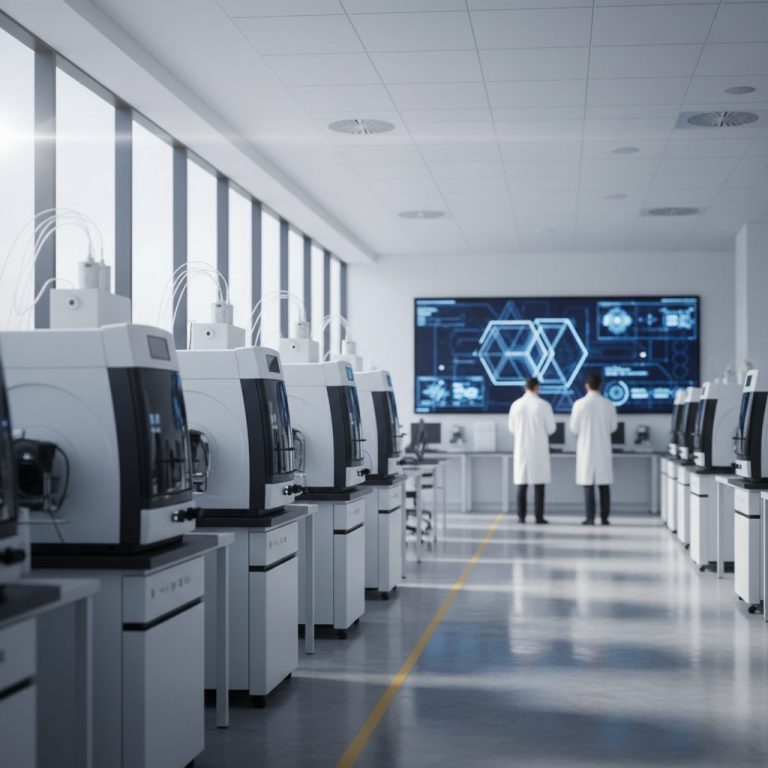

The pharmaceutical industry constantly seeks innovations to expedite drug discovery and development, particularly for complex biomolecules like peptides. The recent installation of Vapourtec’s pioneering production Peptide-Builder system at the University of East Anglia (UEA) marks a significant stride in addressing critical bottlenecks in peptide synthesis, promising to accelerate the identification and optimization of novel peptide therapeutics for high-unmet-need indications such as oncology, infectious diseases, and inflammatory conditions.
This development is not merely an incremental improvement; it represents a foundational shift in research infrastructure that could reshape early-stage peptide pipelines, ultimately impacting clinical viability and market entry for future drugs.
Peptides, with their inherent specificity, lower toxicity profiles compared to small molecules, and often superior pharmacokinetic properties over biologics, are garnering renewed attention in the therapeutic landscape.
The global peptide therapeutics market, valued at approximately $45.1 billion in 2023, is projected to reach $83.4 billion by 2030, driven by advancements in synthesis technologies, delivery methods, and a deeper understanding of peptide pharmacology¹. This growth underscores the urgent need for efficient, scalable, and high-quality peptide synthesis platforms.
Historically, the laborious and often inconsistent nature of traditional solid-phase peptide synthesis (SPPS) has been a significant barrier to rapidly exploring diverse peptide sequences and optimizing candidates.
This limitation directly impacts the pace at which potential drug candidates can progress from the bench to preclinical validation and, eventually, to human trials. Consequently, any technology that streamlines this initial, rate-limiting step holds immense strategic value for drug developers and, by extension, for patients awaiting innovative therapies.
Vapourtec’s Peptide-Builder system is designed to overcome many of the conventional limitations of peptide synthesis, integrating advanced flow chemistry principles with automated, real-time monitoring capabilities. This combination allows for a new level of control and insight into the synthesis process, which is critical for developing complex and longer peptide sequences.
The successful synthesis of 16-mer, 23-mer, and 35-mer peptides during initial training sessions at UEA, as highlighted by Dr. Manuel Nuño, Vapourtec’s Chief Scientific Officer, underscores the system’s robust performance and capacity for handling challenging targets.

Clinical Snapshot
The system’s real-time monitoring capabilities provide invaluable data on reaction kinetics and efficiency, allowing researchers to optimize synthesis parameters on the fly. This contrasts sharply with traditional batch methods, where issues often remain undetected until post-synthesis analysis, leading to time-consuming troubleshooting and resource wastage.
Furthermore, the ability to queue up to 16 peptides for automated synthesis represents a significant throughput advantage. This parallel processing capability drastically reduces the human intervention required and accelerates the generation of peptide libraries, which are essential for structure-activity relationship (SAR) studies and lead optimization.
The University of East Anglia’s research groups, led by Professor Mark Searcey and Dr. Andrew Beekman, are strategically integrating the Peptide-Builder into their investigations of peptides targeting DNA and protein-protein interactions. This focus is particularly pertinent, as modulating protein-protein interactions (PPIs) remains a formidable challenge in drug discovery.
Peptides, with their intermediate size and conformational flexibility, are uniquely positioned to disrupt or stabilize PPIs that are often intractable for small molecules². For instance, in oncology, many oncogenic pathways are driven by PPIs, and peptide inhibitors offer a promising avenue for novel anti-cancer agents³.
Similarly, anti-microbial peptides (AMPs) represent a crucial class of therapeutics in the face of escalating antimicrobial resistance, where precise synthesis is paramount for optimizing their activity and stability⁴. By enabling the rapid generation and optimization of such peptides, the Peptide-Builder directly contributes to advancing these critical therapeutic areas.
While the Vapourtec Peptide-Builder is an R&D tool and not a therapeutic agent itself, its impact on the pharmaceutical regulatory landscape is indirect but profound.
The journey of any drug candidate through regulatory phases from preclinical testing to IND (Investigational New Drug) submission, then Phase I, II, and III clinical trials, and finally NDA (New Drug Application) submission is heavily influenced by the efficiency and quality of early-stage research.
By streamlining and accelerating peptide synthesis, the Peptide-Builder significantly compresses the preclinical development timeline. This impacts several critical regulatory considerations:
In essence, technologies like the Peptide-Builder serve as enablers for de-risking early-stage peptide drug candidates. By providing superior quality materials faster, they help bridge the gap between initial discovery and the stringent requirements for regulatory submissions, thereby accelerating the overall drug development lifecycle.
The more robust and efficiently a peptide candidate can be generated and characterized in the research phase, the smoother its path is likely to be through preclinical and clinical development, leading to quicker regulatory decisions and patient access.
The installation of Vapourtec’s Peptide-Builder at UEA exemplifies a broader trend in pharmaceutical R&D: the increasing reliance on advanced automation and flow chemistry to tackle complex synthetic challenges.
In the short term, this particular installation will undoubtedly accelerate the UEA research teams’ efforts in discovering novel anti-cancer, anti-microbial, and anti-inflammatory peptides. This could lead to the identification of several promising preclinical candidates within the next few years.
Looking further ahead, the successful deployment and reported performance of systems like the Peptide-Builder will likely encourage wider adoption across academic institutions and pharmaceutical companies.
This widespread integration could usher in an era where the bottleneck of peptide synthesis is largely alleviated, allowing medicinal chemists and biologists to focus more intently on biological evaluation and mechanistic studies.
The long-term impact will be a richer pipeline of diverse peptide therapeutics, potentially targeting a broader array of diseases with improved efficacy and safety profiles. As a former hospital pharmacist, I can tell you that getting these innovative molecules to patients faster means everything; it’s the tangible outcome we all strive for.
This technology, therefore, represents a crucial step in fulfilling the therapeutic promise of peptides in a rapidly evolving healthcare landscape.
Stay ahead of the clinical curve—the next great peptide is already in Phase 2. 💊
All human research MUST be overseen by a medical professional.