

Understanding Alzheimer’s amyloid-beta is like solving a puzzle in the dark. For decades, scientists believed this protein followed a straight line to destruction. However, new research from Binghamton University suggests the process is far more complex.
At its core, Alzheimer’s amyloid-beta consists of small protein fragments. These fragments normally exist in the brain without causing any harm. But in patients with dementia, they misfold and begin to clump together.
These clumps eventually form the toxic plaques that characterize the disease. Consequently, neurons lose their ability to communicate effectively with one another. This breakdown is the primary driver behind memory loss and cognitive decline.

Professor Wei Qiang has spent a decade studying these molecular structures. His team discovered that Alzheimer’s amyloid-beta acts like a structural chameleon. It does not just form one type of clump but many.
This variety is known as structural polymorphism in medical research. It explains why some patients experience a much faster decline than others. Therefore, a single drug may not be effective for every version of the protein.
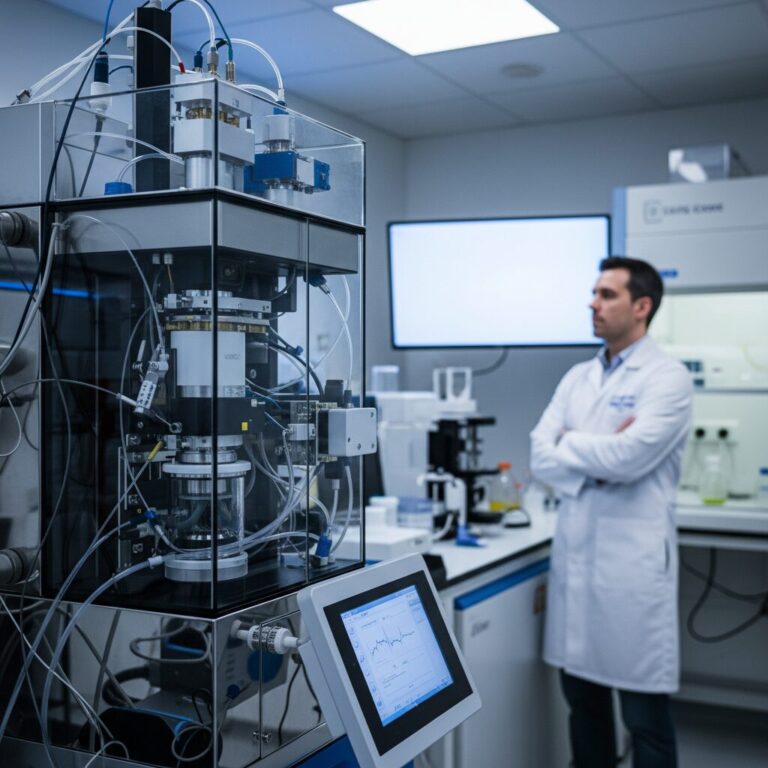
Professor Qiang utilizes solid-state nuclear magnetic resonance (NMR) spectroscopy for his work. This advanced tool allows researchers to take snapshots of the protein’s aggregation. This method is crucial for seeing the very first steps of the disease.
The team has analyzed samples from typical and rapidly progressive cases. They found that rapidly progressing dementia has more diverse protein shapes. Understanding these shapes is essential for developing the next generation of treatments.
Professor Qiang utilizes solid-state nuclear magnetic resonance (NMR) spectroscopy for his work. This advanced tool allows researchers to take snapshots of the protein’s aggregation. This method is crucial for seeing the very first steps of the disease.
The team has analyzed samples from typical and rapidly progressive cases. Understanding these shapes is essential for developing the next generation of treatments.
Current therapies like Lecanemab target specific forms of these toxic aggregates. However, the discovery of polymorphism suggests we need a multi-pronged approach.
By identifying the exact amino acid sequences, we can improve drug design. Researchers are now using machine learning to map out these complex protein landscapes. This innovation provides a roadmap for finding new therapeutic “hot spots.”
The future of research lies in embracing the complexity of the brain. As we master the science of Alzheimer’s amyloid-beta, we get closer to a cure. Stay informed as scientists rewrite the script on neurodegenerative disorders.
What’s your hidden peptide pearl? DM me—let’s co-author the next unearthed epic. 🧪
¹ Qiang, W., Yau, W.-M., Lu, J.-X., Collinge, J., & Tycko, R. (2017). Structural Variation in Amyloid-β Fibrils from Alzheimer’s Disease Clinical Subtypes. Nature, 541(7636), 217–221. https://pmc.ncbi.nlm.nih.gov/articles/PMC5233555/
² Liu, K. (2026, March 9). Research could reframe understanding of Alzheimer’s. Binghamton News. https://www.binghamton.edu/news/story/6101/binghamton-research-could-reframe-understanding-of-alzheimers
³ NIH Awards by Location and Organization – Funding. (2018, December 12). NIH Research Portfolio Online Reporting Tools (RePORT). https://report.nih.gov/award/index.cfm?ot=&fy=2018&state=&ic=&fm=&orgid=5992621&distr=&rfa=&om=n&pid=
⁴ Oren, O., Taube, R., & Papo, N. (2021). Amyloid β structural polymorphism, associated toxicity and therapeutic strategies. Cellular and Molecular Life Sciences, 78(11), 6003–6025. https://pmc.ncbi.nlm.nih.gov/articles/PMC11072899/
⁵ Chen, G.-f., Xu, T.-h., Yan, Y., Zhou, Y.-r., Jiang, Y., Melcher, K., & Xu, H. E. (2017). Amyloid beta: structure, biology and structure-based therapeutic development. Acta Pharmacologica Sinica, 38(9), 1205–1235. https://www.nature.com/articles/aps201728
⁶ Abduljawad, A. A., Alkinani, K. B., Zaakan, A., AlGhamdi, A. S., Hamdoon, A. A. E., Alshanbari, B. H., Alluhaybi, B. B., Alqashi, S. O. I., & Abduljawad, R. A. (2025). Targeting Amyloid-β Proteins as Potential Alzheimer’s Disease Therapeutics: Anti-Amyloid Drug Discovery, Emerging Therapeutics, Clinical Trials and Implications for Public Health. Pharmaceuticals, 18(11), 1731. https://pmc.ncbi.nlm.nih.gov/articles/PMC12655499/
All human research MUST be overseen by a medical professional.