

Camel antimicrobial peptides are gaining attention as researchers search for new ways to fight antibiotic resistant bacteria. According to data published in The Lancet, antibiotic resistance caused 1.27 million deaths in 2019. The World Health Organization has identified antimicrobial resistance as one of the top global health threats. As traditional antibiotics lose effectiveness, naturally occurring immune molecules may offer alternative solutions.
Scientists at Sultan Qaboos University identified three camel antimicrobial peptides known as CdPMAP-23, CdPG-3, and CdCATH. Their findings were published in Frontiers in Immunology. These peptides belong to the cathelicidin family, which supports innate immune defense.
Laboratory testing showed that camel antimicrobial peptides can reduce bacterial growth in both Gram positive and Gram negative strains. The most active peptides, CdPG-3 and CdCATH, demonstrated significant reductions against methicillin resistant Staphylococcus aureus and multidrug resistant Escherichia coli. The Centers for Disease Control and Prevention classifies MRSA as a serious public health concern.
Furthermore, Unlike many antibiotics that target a single bacterial process, camel antimicrobial peptides primarily disrupt bacterial membranes. Specifically, because bacterial membranes carry a negative charge, they attract positively charged peptides. Once attracted, these peptides insert into the membrane, destabilize it, and consequently cause the leakage of cellular contents. As a result, this broader mechanism may reduce the speed at which resistance develops compared to conventional antibiotics. Similarly, researchers observe a comparable mechanism in the human antimicrobial peptide LL-37.

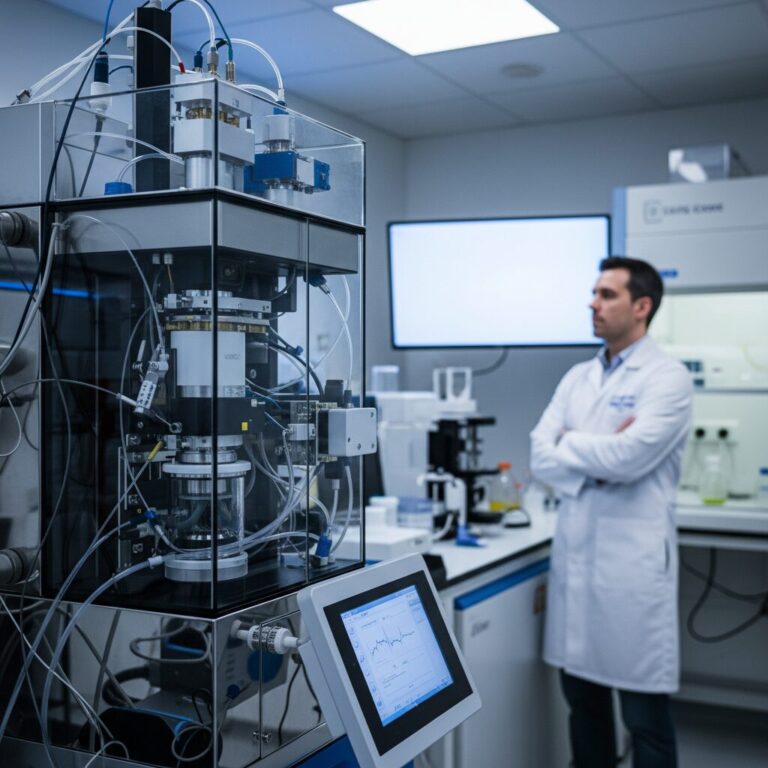
The effectiveness of camel antimicrobial peptides was evaluated using colony forming unit assays, which measure how many bacteria survive after treatment. The results showed clear reductions in bacterial growth across multiple strains.
Against methicillin resistant Staphylococcus aureus, known as MRSA and classified as a serious threat by the Centers for Disease Control and Prevention, peptides CdPG-3 and CdCATH achieved reductions of more than 2 log units at higher concentrations, meaning over 99 percent of bacteria were eliminated in laboratory tests.
Camel antimicrobial peptides also showed activity against multidrug resistant Escherichia coli and carbapenem resistant Klebsiella pneumoniae, both linked to hospital acquired infections. CdCATH demonstrated the strongest effect, while CdPMAP-23 showed moderate but measurable antibacterial activity.
Preclinical safety testing showed low hemolytic activity for some camel antimicrobial peptides at moderate concentrations. However, higher doses of certain peptides caused increased red blood cell damage. Therefore, optimization and dosage refinement are necessary before clinical consideration.
Camel antimicrobial peptides remain experimental and are not approved treatments. Further research, regulatory evaluation, and clinical trials are required. All human research must be conducted under qualified medical supervision.
What’s your hidden peptide pearl? DM me—let’s co-author the next unearthed epic. 🧪
All human research MUST be overseen by a medical professional.
¹ World Health Organization. (2023, November 21). Antimicrobial resistance. Retrieved from https://www.who.int/news-room/fact-sheets/detail/antimicrobial-resistance
² Centers for Disease Control and Prevention. (2024, July). Antimicrobial Resistance Facts and Stats. Retrieved from https://www.cdc.gov/antimicrobial-resistance/data-research/facts-stats/index.html
³ Al-Mamari, W., Elhag, Y., Al Bulushi, S., Rekha, R. S., Mörman, C., Bergman, P., Al-Ansari, A., & Al-Adwani, S. (2026). Identification and characterization of novel antimicrobial peptides from Camelus dromedarius: a combined bioinformatics and experimental study. Frontiers in Immunology, 17, 1745714. https://www.frontiersin.org/journals/immunology/articles/10.3389/fimmu.2026.1745714/full
⁴ Al-Mamari, W., Elhag, Y., Al Bulushi, S., Rekha, R. S., Mörman, C., Bergman, P., Al-Ansari, A., & Al-Adwani, S. (2026). Identification and characterization of novel antimicrobial peptides from Camelus dromedarius: a combined bioinformatics and experimental study. PubMed Central. https://pmc.ncbi.nlm.nih.gov/articles/PMC12872550/
⁵ Kumar, P., Kizhakkedathu, J. N., & Straus, S. K. (2018). Antimicrobial peptides: diversity, mechanism of action and strategies to improve the activity and biocompatibility in vivo. Biomolecules, 8(1), 4. https://doi.org/10.3390/biom8010004
⁶ Al-Qarawi, A. A., & Mousa, H. M. (2004). Lipid concentrations in erythrocyte membranes in normal, starved, dehyrated and rehydrated camels (Camelus dromedarius), and in normal sheep (Ovis aries) and goats (Capra hircus). Journal of Arid Environments, 59(4), 675–683. https://doi.org/10.1016/j.jaridenv.2004.02.004