
Have you ever looked in the mirror and felt like your skin seemed tired, tight, or slightly dull even after moisturizing? Many people experience this when the skin barrier is stressed. Silk peptides for skin are becoming a popular ingredient because they offer hydration and barrier support in a gentle way.
While ingredients like hyaluronic acid and ceramides are widely known, silk peptides provide a complementary approach that focuses on moisture retention and skin comfort.
This guide explores the science behind silk peptides for skin, how they work, how they compare to other ingredients, and how to use them in a skincare routine safely and effectively.
Silk peptides are small protein fragments derived from natural silk. Most cosmetic silk comes from the Bombyx mori silkworm. Raw silk is made primarily of two proteins called fibroin and sericin. Fibroin provides strength and structure to silk fibers. Sericin acts like a binding material that holds fibroin strands together.
Whole silk fibers are too large to be useful in skincare. Scientists use hydrolysis to break silk proteins into smaller fragments. These fragments are called hydrolyzed silk, silk amino acids, or silk peptides. Hydrolysis makes them water soluble and suitable for creams and serums.
Because they are smaller, silk peptides for skin can sit comfortably on the surface and interact with the outermost skin layer known as the stratum corneum. This interaction supports hydration and skin barrier function.
Peptides in skincare often fall into signaling peptides and support peptides. Signaling peptides send messages to skin cells to produce collagen or elastin. Silk peptides for skin work differently. Laboratory research suggests silk proteins may support skin cell activity in wound healing environments.
In cosmetics, they are valued mainly for hydration, film forming ability, and barrier support rather than strong biological signaling.
This makes silk peptides an excellent companion ingredient rather than a replacement for actives like retinol or vitamin C.

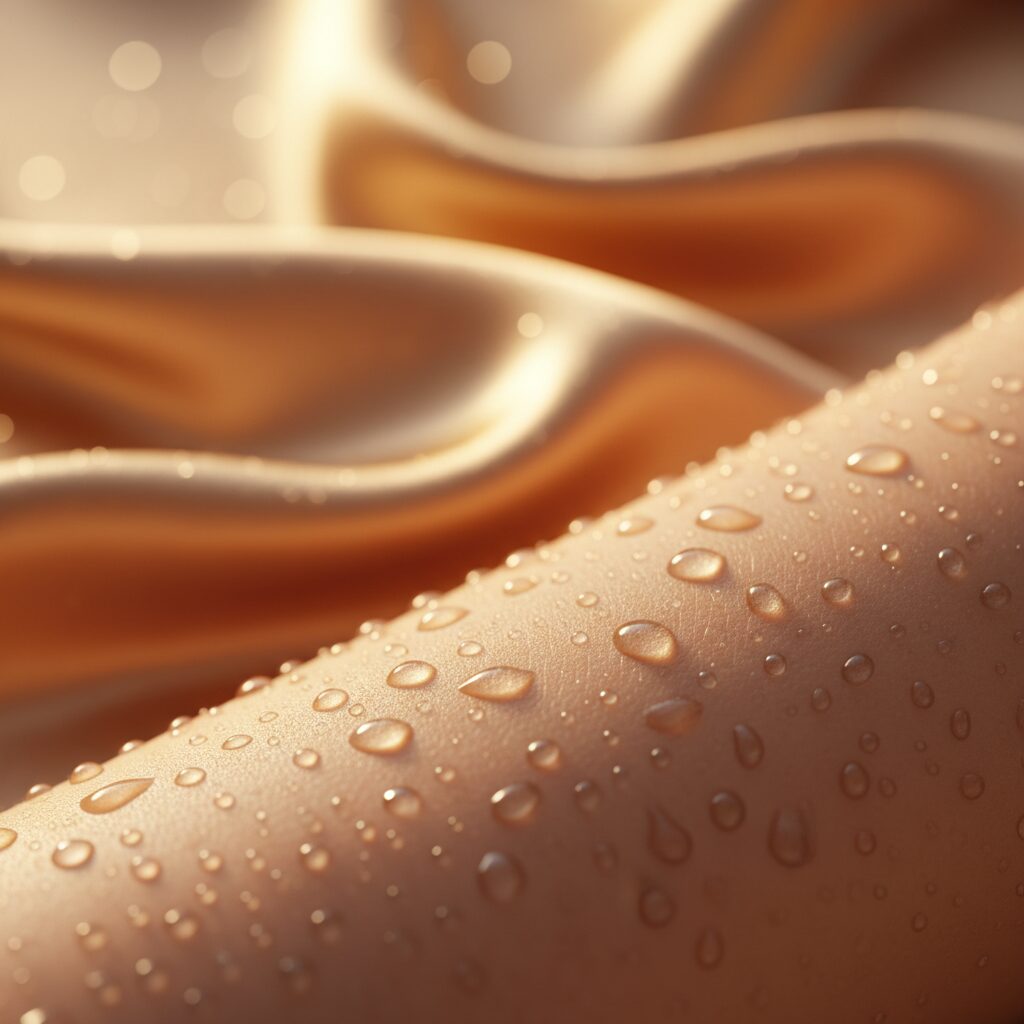
Hydration is one of the strongest reasons people choose silk peptides for skin. These peptides form a light, breathable film on the surface of the skin. This film helps slow water evaporation. Scientists call this process reducing transepidermal water loss or TEWL.
When TEWL decreases, skin retains moisture longer. This leads to softer texture, smoother appearance, and improved comfort.
The skin barrier acts as a shield against pollution, UV exposure, and irritants. When the barrier weakens, skin becomes dry and reactive. Silk peptides for skin help support the barrier in several ways.
First, they create a breathable film that reduces moisture loss. Second, they help the skin feel smoother and more flexible. Third, they support overall comfort for sensitive or reactive skin types.
Healthy skin naturally reflects light better. This is why hydrated skin often appears more radiant.
Many active ingredients can irritate sensitive skin. Silk peptides for skin are generally considered low irritation and suitable for most skin types. Their gentle nature makes them useful in products designed for redness, dryness, or post treatment care.
By helping retain moisture and reinforcing the skin barrier, they reduce the tight or uncomfortable feeling that often follows cleansing or exfoliation.
This is one of the most common questions. Silk peptides for skin do not function like retinol or prescription actives. They do not directly trigger collagen production in the same way. However, hydration plays a major role in the appearance of fine lines.
When skin is well hydrated, it appears plumper and smoother. Fine lines become less noticeable. Elasticity improves visually because hydrated skin bends and reflects light more evenly.
This means silk peptides support the appearance of smoother skin through hydration and barrier care rather than aggressive cell renewal.
Some studies suggest sericin may have antioxidant activity. Antioxidants help neutralize free radicals that form from UV radiation and pollution.
Free radicals contribute to premature aging and skin damage. While cosmetic research is still developing, early findings suggest silk proteins may contribute mild antioxidant support.
The outer layer of skin is designed to keep substances out. This layer is called the stratum corneum. Hydrolyzed silk fragments are small enough to interact with this outer layer. Smaller molecules penetrate more easily. Scientists often refer to the 500 Dalton rule when discussing penetration.
Even when peptides remain on the surface, they still provide benefits. Film forming hydration can significantly improve skin comfort and appearance.
Hyaluronic acid attracts water like a sponge. Silk peptides for skin act more like a breathable shield. They help prevent moisture from escaping. Together, they create a powerful hydration strategy.
Hyaluronic acid pulls water into the skin. Silk peptides help keep that water from evaporating. Using both ingredients together often produces better results than using either alone.
Ceramides repair the lipid barrier between skin cells. Silk peptides form a lightweight protective film. Both contribute to barrier health, but they work differently. Ceramides rebuild the barrier structure. Silk peptides support moisture retention and surface comfort.
Consumers increasingly look for gentle ingredients that support long term skin health. Many people prefer barrier friendly products that can be used daily without irritation.
Silk peptides for skin fit this trend perfectly. They provide hydration, comfort, and compatibility with other ingredients.
Silk peptides commonly appear in:
They are often listed as hydrolyzed silk or silk amino acids in ingredient lists.
Silk peptides are easy to integrate into almost any routine. Because they are gentle, they can be used both morning and evening.
Morning Routine
Evening Routine
Silk peptides pair well with many popular ingredients.
Because silk peptides are supportive rather than aggressive, they help buffer stronger ingredients.
Silk peptides are especially useful for:
They are also suitable for most age groups.
Even gentle ingredients can cause reactions in rare cases. Always patch test new skincare. Apply a small amount behind the ear or on the inner arm. Wait 24 to 48 hours before full use.
People with known silk allergies should avoid silk derived ingredients.
Not all peptide products are equal. Look for brands that provide clear ingredient information and research transparency.
Signs of good formulations include:
Avoid products promising instant dramatic results.
Research into silk proteins continues to grow. Scientists are exploring their role in wound healing, tissue engineering, and barrier repair. While cosmetic applications remain focused on hydration and comfort, innovation may expand their role in future skincare products.
Skincare success rarely comes from one miracle ingredient. Long term consistency creates real results. Silk peptides for skin offer steady support that complements other actives.
Think of them as a foundation that keeps the skin comfortable and hydrated while stronger ingredients do targeted work.
Myth Silk peptides replace retinol
Reality They support hydration but do not replace retinol effects.
Myth Silk peptides penetrate deeply into the skin
Reality Most benefits occur on the skin surface.
Myth Silk peptides are only for luxury skincare
Reality They are now available in many affordable products.
Understanding ingredients empowers better skincare decisions. Silk peptides for skin offer hydration, comfort, and barrier support in a gentle and versatile way. They may not be the most dramatic active ingredient, but they play a valuable supportive role in a balanced routine.
When combined with sunscreen, antioxidants, and barrier repair ingredients, silk peptides help maintain soft, resilient, and comfortable skin.
Healthy skin thrives on consistency, hydration, and protection. Silk peptides support all three.
¹ Caresilk. (2025, September 10). Active cosmetic sericin: Bioactive silk peptides for advanced regenerative skincare. Caresilk. Retrieved from https://www.caresilk.it/en/caresilk-news/active-cosmetic-sericin-bioactive-silk-peptides-for-advanced-regenerative-skincare.html
² Pintea, A., Manea, A., Pintea, C., Vlad, R. A., Bîrsan, M., Antonoaea, P., Rédai, E. M., & Ciurba, A. (2025). Peptides: Emerging Candidates for the Prevention and Treatment of Skin Senescence: A Review. Biomolecules, 15(1), 88. https://pmc.ncbi.nlm.nih.gov/articles/PMC11762834/
³ Herbal Dynamics Beauty. (2020, August 18). All the Amazing Skincare Benefits of Silk Proteins. Retrieved from https://www.herbaldynamicsbeauty.com/blogs/herbal-dynamics-beauty/skincare-benefits-of-silk-protein
⁴ Tian, Z., Chen, H., & Zhao, P. (2025). Compliant immune response of silk-based biomaterials broadens application in wound treatment. Frontiers in Pharmacology, 16, 1548837. https://www.frontiersin.org/journals/pharmacology/articles/10.3389/fphar.2025.1548837/full
⁵ OneSkin. (n.d.). Not All Peptides Are Created Equal. Retrieved from https://www.oneskin.co/blogs/reference-lab/not-all-peptides-are-created-equal
All human research MUST be overseen by a medical professional.