
Hey fam. Kai Rivera here, your resident word slinger and peptide prospector from Peptides.today. Today we are diving straight into the wild world of non-canonical amino acids, and trust me, this story feels like science unlocked a secret level.
Science loves rules. Biology especially loves rules. One of the biggest is the central dogma of molecular biology. In most cases, DNA gets copied into RNA, and RNA tells our cells how to build proteins. For decades, scientists believed proteins were built from a fixed set of twenty canonical amino acids, with a couple rare exceptions like selenocysteine and pyrrolysine. That was the VIP list. The C20 crew.
Then researchers started asking a spicy question. What if we could add more letters to life’s alphabet?
That question opened the door to non-canonical amino acids, and everything got way more interesting.
Imagine your favorite band being told they can only use the same 20 musical notes forever. Eventually things get repetitive. Now imagine handing them a whole new soundboard with brand new tones. That is exactly what is happening in peptide science.
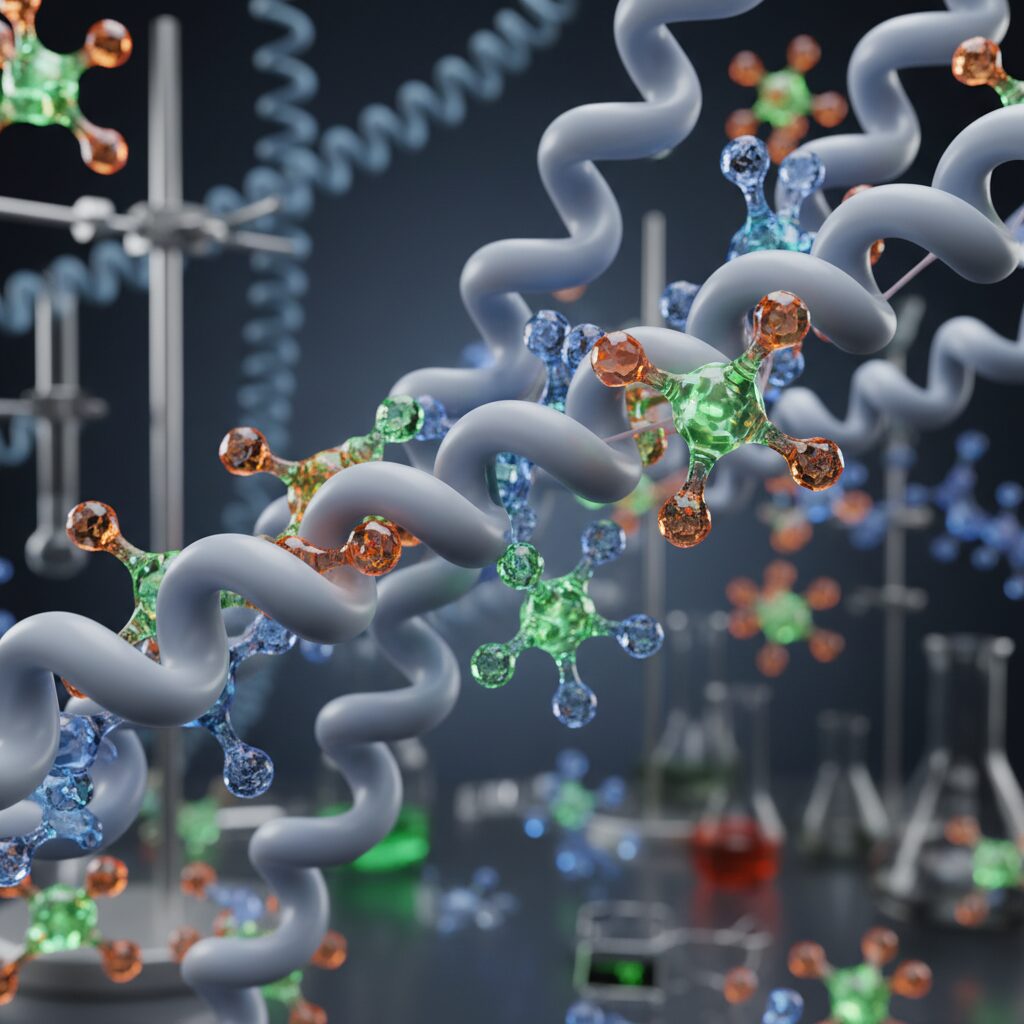
Non-canonical amino acids are amino acids that do not belong to the standard genetic set used by cells to build proteins. Scientists can design and synthesize them in the lab. Then they can build peptides that nature never tried before.
This field is sometimes called foldamer or xenoprotein research. It explores how synthetic building blocks can form stable protein like structures. Researchers use techniques like solid phase peptide synthesis and expanded genetic code systems to insert these new amino acids into peptides.
The result is simple and mind blowing at the same time. We are no longer limited to nature’s toolbox. We can design our own.
For deeper background on molecular biology basics, you can read our guide to the central dogma of molecular biology. For readers who want to explore how these molecules are made, check our article on peptide synthesis methods.

Standard peptides are powerful but fragile. Enzymes break them down quickly. They sometimes miss their target. Sometimes they disappear from the body before they can finish their job.
Now picture giving peptides armor, GPS, and extra battery life.
That is what non-canonical amino acids can do.
First, they can improve stability. Many engineered peptides resist enzymes that normally destroy natural peptides. That means longer activity and better performance.
Second, they can improve precision. Scientists can tweak charge, shape, and flexibility. These changes help peptides bind tightly to very specific targets.
Third, they can improve drug performance. Researchers are designing peptide drugs that last longer and work better.
This is why protein engineering has exploded in the past decade. You can explore more about this growing field through research from the National Center for Biotechnology Information
Let us talk about the real superpower. Stability.
Natural peptides often break down fast inside the body. Enzymes called proteases act like molecular scissors. They cut peptides into pieces before they can do much work.
Non-canonical amino acids help peptides resist those scissors.
Scientists can add chemical structures that enzymes do not recognize. This trick slows degradation. It increases half life. It improves delivery.
If you want to understand why stability matters, our guide on peptide stability and half life dives deeper into this topic.
Because of these changes, peptide therapeutics are becoming more realistic treatment options. This includes targeted cancer therapies, hormone mimics, and advanced drug delivery systems.
Now things get futuristic.
Peptides built with non-canonical amino acids can form new materials. Some self assemble into fibers or scaffolds. Others form nanoscale delivery systems.
Researchers are studying peptides that can help regenerate tissue. Some may act as smart carriers that release drugs only when they reach the right location.
This is not science fiction. It is active research happening right now.
These discoveries matter because they expand what proteins can do. They expand what medicine can do.
Designing peptides today feels like molecular engineering.
Scientists can adjust hydrophobicity. They can modify electrical charge. They can change flexibility. Each tiny adjustment creates a ripple effect in how peptides behave.
This level of control was impossible when we relied only on natural amino acids.
Now researchers can design peptides that self assemble into structures. They can design peptides that carry drugs. They can design peptides that bind to targets with incredible accuracy.
The shift from discovery to design is the big story here.
Now let us pause and keep it real.
This research happens in advanced labs with strict controls. Synthesizing peptides with non-canonical amino acids requires precision chemistry and deep expertise.
Unfortunately, the grey market for research peptides exists. Many products online lack proper verification and quality control.
When molecules become more complex, the risks increase. Purity and exact molecular structure become critical.
Always rely on reputable research sources and proper scientific oversight. For more information, read our article on research peptides quality standards.
These compounds are research tools. They are not casual health experiments.
So what is the big takeaway.
Scientists are expanding the alphabet of life. Non-canonical amino acids allow researchers to design peptides that are stronger, smarter, and more precise.
This research could lead to better drugs, smarter materials, and entirely new scientific breakthroughs.
Instead of following biology’s old rulebook, researchers are learning how to write new chapters.
And honestly, that is the coolest part.
What is your hidden peptide pearl? DM me and let’s co author the next unearthed epic.