

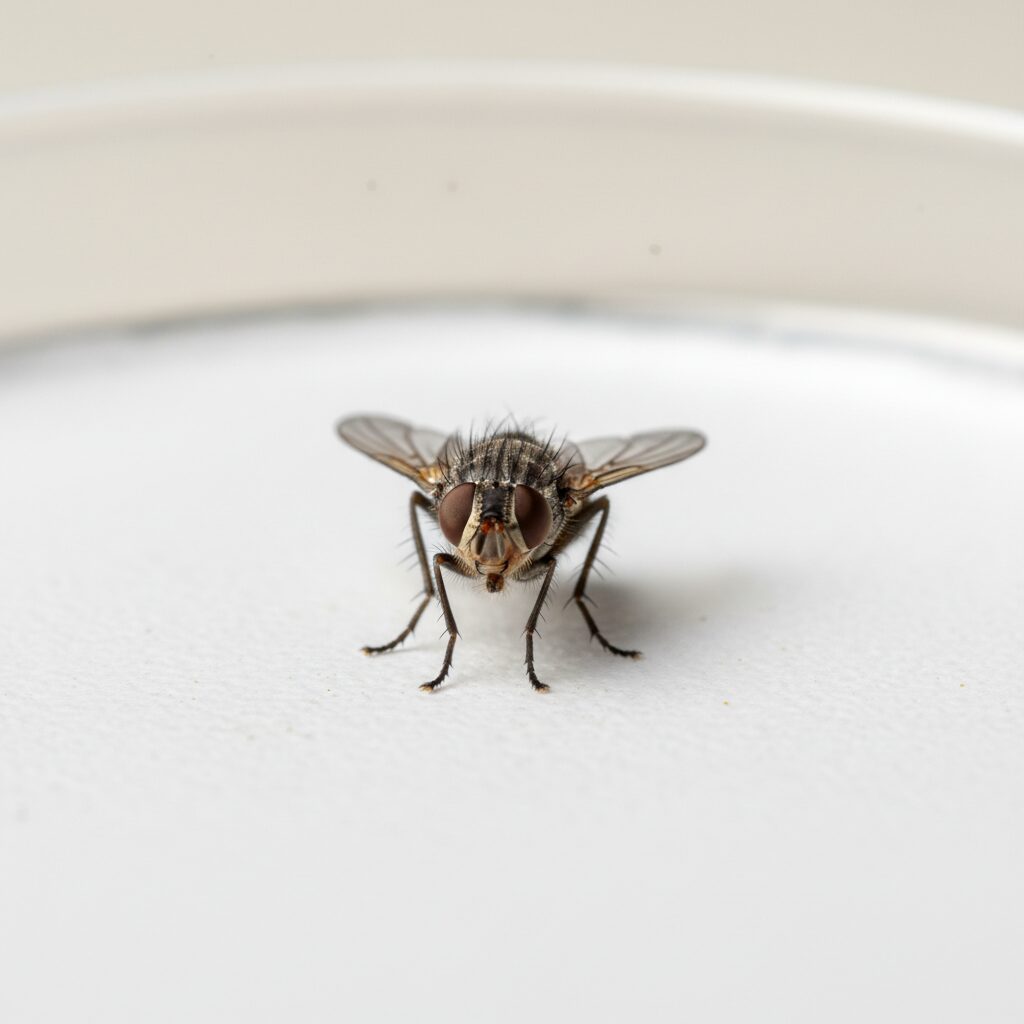
Fruit fly post mating behavior might sound niche, but it reveals how brains convert biology into decisions. Scientists studying Drosophila melanogaster recently uncovered how a tiny molecule called Sex Peptide reshapes the female brain and body after mating.
Even though fruit flies are small, their post mating switch is powerful and surprisingly complex. Once mating ends, the female stops seeking partners and begins focusing on reproduction. This dramatic shift is not random. Instead, it is driven by precise neural circuits that act like control panels inside the nervous system.
Understanding fruit fly post mating behavior helps researchers explore how hormones, neurons, and behavior connect across animals. In addition, it offers insight into how brains prioritize survival and reproduction.
After mating, female fruit flies experience two major changes. First, they become unreceptive to further mating. Second, they dramatically increase egg laying. Researchers call these responses remating refractoriness and increased oviposition.
This behavioral flip happens because male flies transfer a molecule called Sex Peptide during mating. This peptide binds to a receptor known as the Sex Peptide Receptor. Once activated, it triggers a cascade of behavioral and physiological changes.
However, the story does not stop there. Scientists have shown that Sex Peptide also influences feeding, sleep, immune responses, and learning processes. In other words, the female fly enters a full reproductive optimization mode.
Sex Peptide acts like a biological message delivered directly into the female during mating. Once inside her body, the molecule binds to receptors across multiple tissues. Evidence suggests the peptide circulates through the hemolymph, which is the insect equivalent of blood, allowing it to reach distant neural targets.
Researchers have long wondered which neurons respond to this signal. Earlier studies identified the receptor and confirmed its role in behavioral switching.
Still, scientists wanted to know how the brain separates the decision to reject new mates from the decision to lay eggs. The newest research provides the clearest answer yet.

A breakthrough experiment allowed scientists to produce a tethered version of Sex Peptide in specific body regions. This clever approach helped isolate which parts of the nervous system control each behavior.
When the peptide was expressed mainly in the head, females rejected mating attempts but did not increase egg laying. When the peptide was expressed in the trunk region, females laid eggs but still accepted mates.
These results show that fruit fly post mating behavior relies on two distinct control systems. The brain manages mating decisions. Meanwhile, the abdominal nervous system regulates egg laying. Together, they create a coordinated but flexible response.
Researchers used genes known as fruitless, doublesex, and the Sex Peptide Receptor to target specific neuron groups. These genes shape sex specific neural circuits during development. Using precise genetic tools, scientists identified groups of neurons called SP Response Inducing Neurons, or SPRINz.
Some SPRINz neurons influence both egg laying and mating rejection. Others specialize in only one response. This finding reinforces the idea that fruit fly post mating behavior is modular rather than controlled by a single master switch.
Earlier theories suggested sensory neurons in the reproductive tract were the main targets of Sex Peptide. However, new data challenge that assumption. Researchers discovered that the key neurons receive input from higher order brain regions instead.
This means the response is not a simple reflex. Instead, the brain integrates experience, environment, and internal state before making decisions.
Connections between mushroom bodies and SPRINz neurons suggest that past experiences influence reproductive choices. For example, environmental conditions may affect egg laying while mating rejection remains active.
One of the most fascinating discoveries is behavioral flexibility. A female may delay egg laying if conditions are poor, yet still reject new mates. This shows that the two systems communicate while remaining independent.
Such flexibility provides evolutionary advantages. The female can conserve resources and choose optimal conditions for offspring survival. At the same time, she avoids unnecessary mating.
This layered decision making highlights how even tiny brains can perform complex behavioral integration.
Scientists used advanced tracing tools such as retro Tango and trans Tango to map neural connections. These techniques identify neurons that send signals to and from SPRINz populations.
The resulting neural map shows multiple input pathways feeding into the reproductive decision network. Signals then travel to output neurons in both the brain and abdominal ganglion. This architecture allows the fly to coordinate behavior across the entire body.
Although fruit flies are tiny, their neural systems follow principles shared across animals. Hormones interact with neural circuits. Circuits integrate information. Behavior emerges from coordinated activity.
Because of this, Drosophila research often informs neuroscience more broadly. Scientists use these insights to understand how brains manage competing priorities and adapt to changing environments.
This research marks an important step forward. Scientists can now explore how environmental cues, stress, and nutrition affect the reproductive decision network. In addition, genetic tools continue to improve, allowing even finer mapping of neural circuits.
As research continues, fruit fly post mating behavior will remain a powerful model for studying how molecules influence behavior. What began as a tiny peptide story has grown into a full exploration of how brains turn biological signals into action.
All human research MUST be overseen by a medical professional.