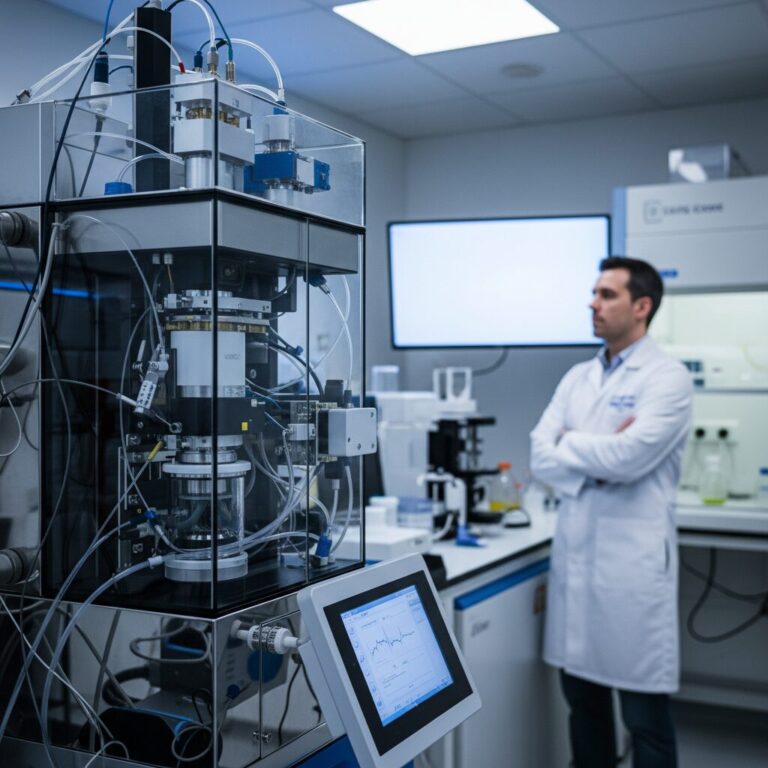

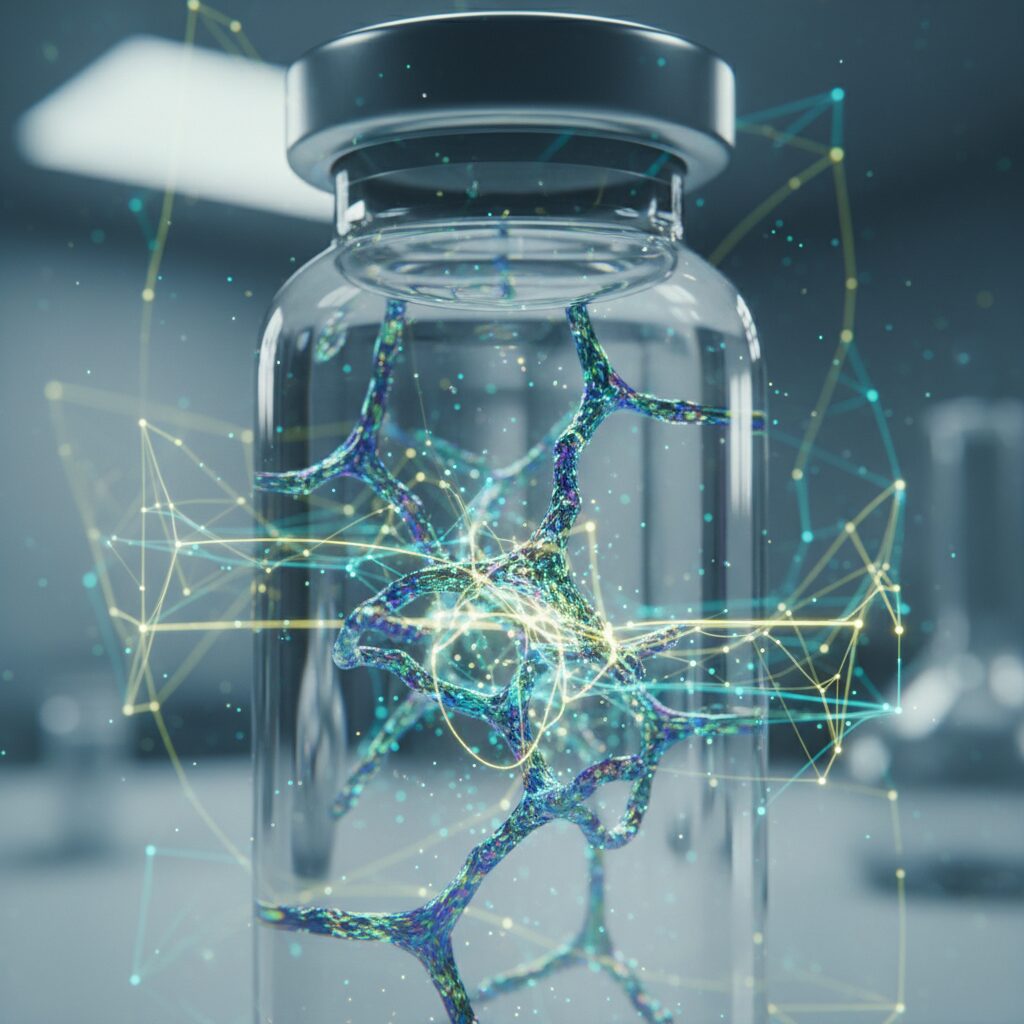
Hey curious minds and research rebels. Kai Rivera here, Chief Investigative Scribe at Peptides.today, and today we are talking about something that sounds ridiculous until you realize it is very real science. The AI cancer detection urine test is emerging as one of the most exciting areas of early cancer research. Yes, we are talking about detecting cancer using urine, artificial intelligence, and molecular sensors so small they make dust look bulky.
Imagine a future where cancer screening does not start with scary scans or invasive biopsies, but with a simple urine sample. That is the promise behind AI cancer detection urine test research now being explored by teams combining biology, chemistry, and machine learning.
This is not a finished medical product yet. It is active research. But the science underneath it is solid, and the potential impact is enormous.
An AI cancer detection urine test is a diagnostic approach that uses artificial intelligence to design molecular sensors capable of identifying cancer related biomarkers in urine.
These biomarkers can include proteins, fragments of DNA or RNA, and metabolic byproducts that appear when cancer begins developing. Long before tumors are visible on imaging scans, the body often releases subtle molecular signals. Urine acts like a biological snapshot of those changes.
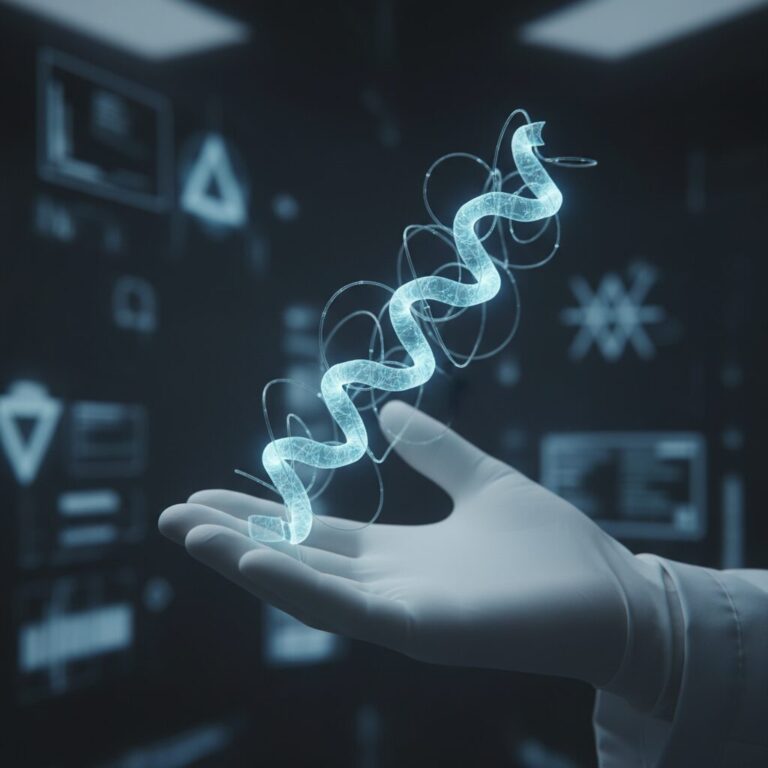
The role of AI is critical. Instead of relying only on trial and error in the lab, machine learning models analyze massive datasets to design sensors that bind precisely to cancer specific molecules while ignoring everything else.
Think of it as teaching a lock to recognize only one exact key among millions.

Designing molecular sensors manually is slow and complex. Molecules fold, twist, and interact in three dimensional space. Predicting which shapes will bind to cancer biomarkers is not something humans can do efficiently on their own.
AI accelerates this process by simulating billions of molecular interactions in silico. The system predicts which molecular structures are most likely to bind to a target biomarker found in urine. Researchers then test the best candidates in the lab.
This AI driven design process is being explored in academic and industry research, including work from major research institutions and technology labs.
The key point is this. AI does not diagnose cancer by itself. It helps design the tools that make ultra sensitive detection possible.
Urine is one of the most underrated diagnostic materials in medicine. It is easy to collect, non invasive, and rich in biological information.
An AI cancer detection urine test takes advantage of several unique benefits.
First, urine collection does not require needles, radiation, or specialized facilities. This makes large scale screening far more realistic.
Second, urine contains metabolic waste, proteins, and genetic fragments filtered from the bloodstream. When cancer alters cellular behavior, those changes can show up in urine earlier than symptoms appear.
Third, frequent testing becomes feasible. People are far more likely to comply with routine urine tests than invasive procedures. That matters for early detection.
Catching cancer early changes everything.
When cancer is detected at an early stage, treatment options are broader, less aggressive, and more effective. Survival rates improve dramatically. Quality of life outcomes improve as well.
An AI cancer detection urine test focuses on identifying cancer before it becomes clinically obvious. This is sometimes called pre symptomatic or ultra early detection.
According to cancer research data from organizations like the National Cancer Institute, early stage detection is one of the strongest predictors of positive outcomes.
This is why researchers are so excited about urine based AI diagnostics. They aim to catch disease when intervention is simplest.
Now for the reality check. AI cancer detection urine test technology is still in research and validation stages.
These tests are not yet approved for routine clinical use. Large scale clinical trials are required to confirm accuracy, sensitivity, and specificity across diverse populations.
False positives and false negatives remain challenges. Biomarkers can overlap between diseases. AI models must be trained carefully to avoid bias.
That said, progress is steady. Every year, models improve, sensors become more selective, and datasets grow stronger.
This is why responsible communication matters. This technology is promising, not magical.
If validated, AI cancer detection urine test systems could significantly reshape clinical laboratory workflows.
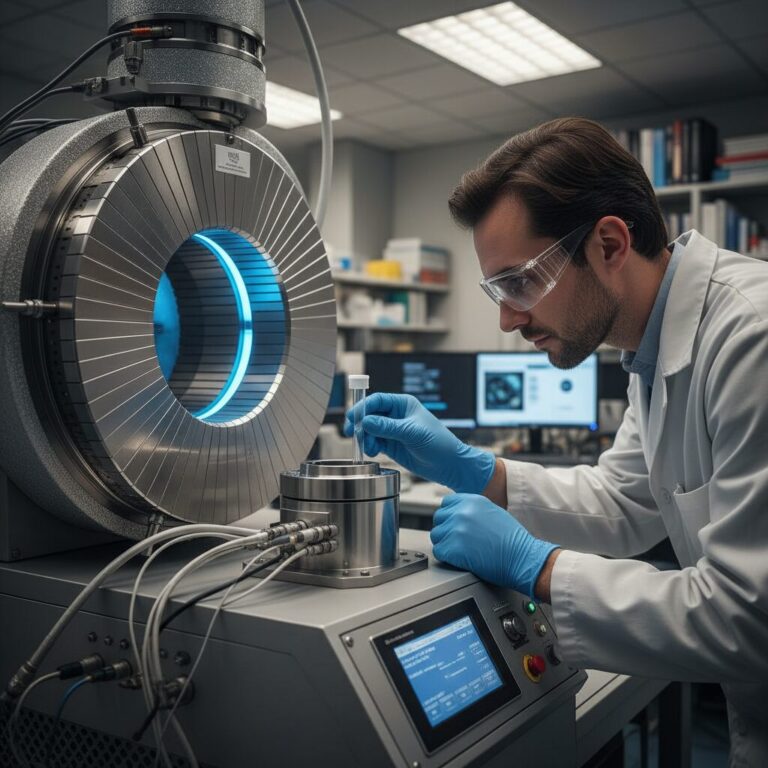
Labs may adopt high throughput sensor analysis platforms. Automated interpretation systems may assist technicians in analyzing results. New quality control standards will be required.
Training will also evolve. Lab professionals will need familiarity with AI assisted diagnostics and molecular sensor technologies.
This shift does not replace clinicians. It enhances their ability to act earlier with better data.
The long term vision is simple. More people screened earlier, more often, with less friction.
An AI cancer detection urine test could eventually be part of routine preventive care, similar to blood pressure checks or cholesterol screening.
That future depends on rigorous science, ethical deployment, and medical oversight. All human research must be overseen by qualified medical professionals.
But if the promise holds, this approach could reduce late stage diagnoses and save countless lives.
Science does not always arrive quietly. Sometimes it shows up wearing a lab coat and knocking on the bathroom door.
The AI cancer detection urine test is a perfect example of how artificial intelligence is reshaping biology at the molecular level. It blends data science, chemistry, and medicine into a tool that could fundamentally change how we detect disease.
This story is still unfolding. But it is one worth watching closely.
Got a peptide puzzle or research oddity you want unpacked? DM me. Let’s dig into the next scientific plot twist together. 🧪