
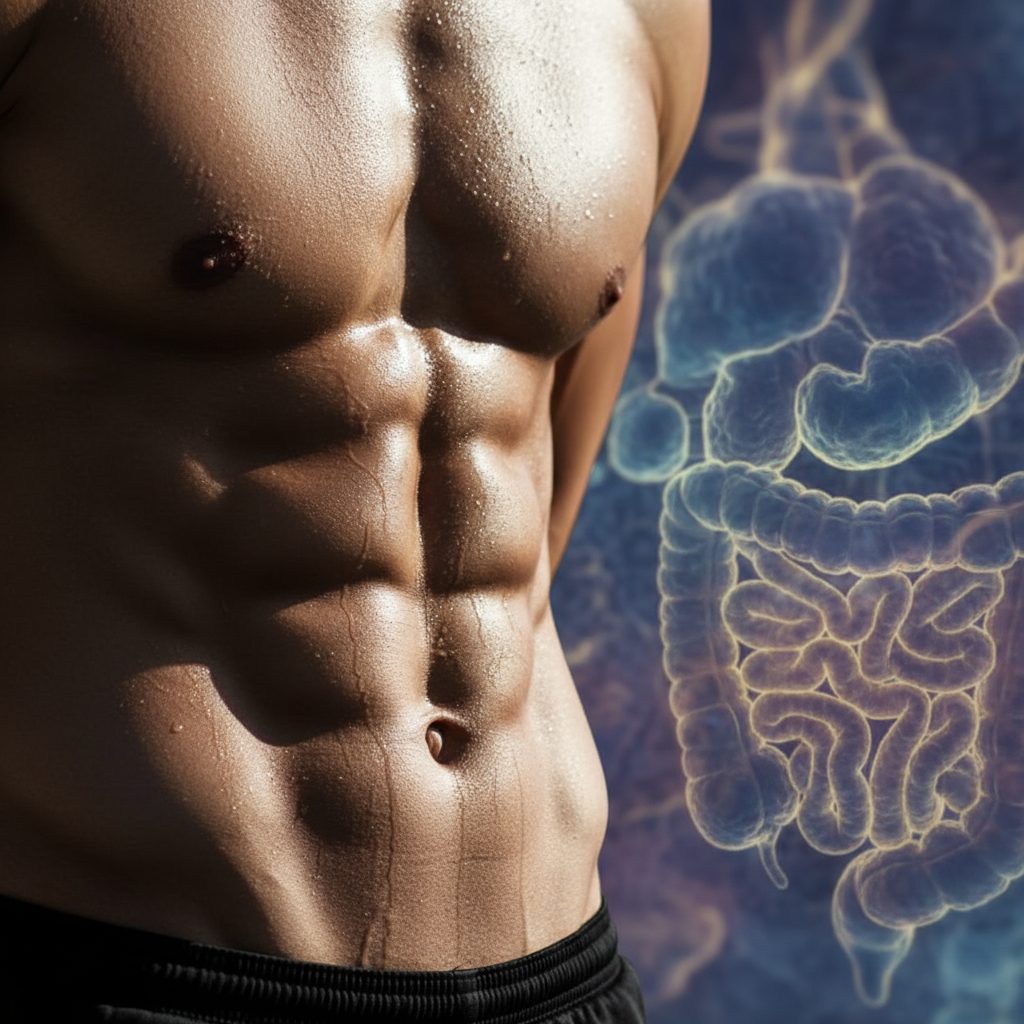
BPC-157 gut health is becoming a major talking point in athletic recovery and performance circles. Your gut does far more than digest food. It controls nutrient absorption, immune response, inflammation levels, and even how well your body recovers from training stress. When gut health suffers, everything else follows.
From soreness that lingers too long to fatigue that will not go away, many performance issues begin in the gut. That is why compounds like BPC-157 are drawing attention. Originally identified in gastric juice, BPC-157 has been studied for its potential role in supporting gut lining integrity in preclinical research. While excitement is growing, the science still requires careful interpretation.
Let’s break down what BPC-157 gut health research actually shows and where caution is still needed.
A healthy gut barrier allows nutrients to pass into the bloodstream while keeping harmful substances out. When this barrier becomes compromised, inflammation increases and nutrient absorption drops. Over time, this can directly affect strength, endurance, recovery, and immune function.
Athletes place extreme stress on the digestive system. High calorie intake, supplements, travel, and intense training all strain gut health. As a result, maintaining gut integrity is not optional if performance matters.
You can explore this further in our internal guide on gut health and athletic performance. This foundational knowledge makes it easier to understand why BPC-157 gut health research matters.

BPC-157 is a synthetic peptide derived from a naturally occurring protein found in gastric juice. Early animal studies suggest that BPC-157 gut health effects may include support for the gastrointestinal lining and protection of gut mucosa under stress.
Some studies describe BPC-157 as a potential mediator in maintaining gastrointestinal mucosal integrity. In simpler terms, it may help the gut lining remain intact when exposed to injury, inflammation, or stress. This is especially relevant for athletes whose digestive systems are constantly challenged.
However, it is important to emphasize that most BPC-157 gut health research comes from animal models. These findings are promising, but they are not definitive proof of benefits in humans.
A strong gut barrier supports better absorption of protein, carbohydrates, fats, vitamins, and minerals. When absorption improves, recovery improves as well. This is one reason BPC-157 gut health discussions often focus on athletic recovery.
If nutrients are not absorbed efficiently, muscle repair slows down. Energy levels drop. Immune defenses weaken. Maintaining gut integrity is therefore a performance multiplier.
You can connect this concept with our internal article on macronutrients for muscle recovery, which explains how digestion and absorption directly impact training results.
BPC-157 gut health research does not stop at digestion. Some animal studies suggest possible neuroprotective and cardioprotective signals. These findings indicate that BPC-157 may influence nerve tissue response and blood vessel function in certain injury models.
For athletes, this sparks interest because nerve irritation and circulatory stress are common issues during heavy training cycles. Still, these findings remain early and experimental. No strong human data confirms these effects in real-world athletic settings.
At this stage, these signals should be viewed as areas of ongoing research, not established benefits.
Myth Busting the BPC-157 Gut Health Hype
There is a growing myth that BPC-157 is a miracle solution. This belief is driven largely by anecdotes and social media stories. While these stories can be compelling, they are not scientific evidence.
Most positive BPC-157 gut health claims come from animal studies, cell models, or personal experiences. These do not replace controlled human trials. A single success story does not prove safety or effectiveness.
Real science requires large-scale human studies, controlled dosing, and long-term safety monitoring. Until that data exists, skepticism is not negativity. It is responsibility.
BPC-157 is not approved for human use. As a result, there are no standardized dosing guidelines. Research studies have examined injectable, oral, and topical forms in animals, each with different biological implications.
One common question is whether oral BPC-157 gut health benefits are realistic, given stomach acid breakdown. Some animal data suggests oral stability, but this has not been validated in humans.
Animal studies generally show low toxicity at various doses. However, low toxicity in animals does not guarantee safety in humans, especially over long periods. There are also theoretical concerns around angiogenesis, which refers to new blood vessel formation. While no direct cancer link has been proven, caution is warranted for individuals with risk factors.
For safety-focused athletes, this uncertainty matters.
The World Anti-Doping Agency has listed BPC-157 as a prohibited substance. This applies regardless of whether it is used for gut health, recovery, or injury support.
This decision does not necessarily mean BPC-157 is dangerous. It means there is insufficient transparent human data and potential for performance enhancement beyond natural limits.
Competitive athletes must understand that using BPC-157 carries serious regulatory risks.
BPC-157 gut health research is intriguing and evolving. Preclinical studies suggest potential support for gut lining integrity, inflammation modulation, and tissue resilience. These factors matter deeply for athletic performance and recovery.
At the same time, human research is still limited. There are no approved dosing standards, no long-term safety data, and no regulatory oversight for consumer use. This gap between promise and proof is where many people get hurt by hype.
The smartest approach is education. Focus first on proven gut health strategies like nutrition quality, sleep, stress management, and training balance. You can also review our internal guide on recovery science for athletes to build a solid foundation.
BPC-157 gut health may one day be supported by strong human data. Until then, stay informed, stay skeptical, and stay grounded in evidence. Performance is built on consistency and science, not shortcuts.
Your next PR is built from the inside out.
Your next PR is waiting. Go get it. 🏋️
All human research MUST be overseen by a medical professional