
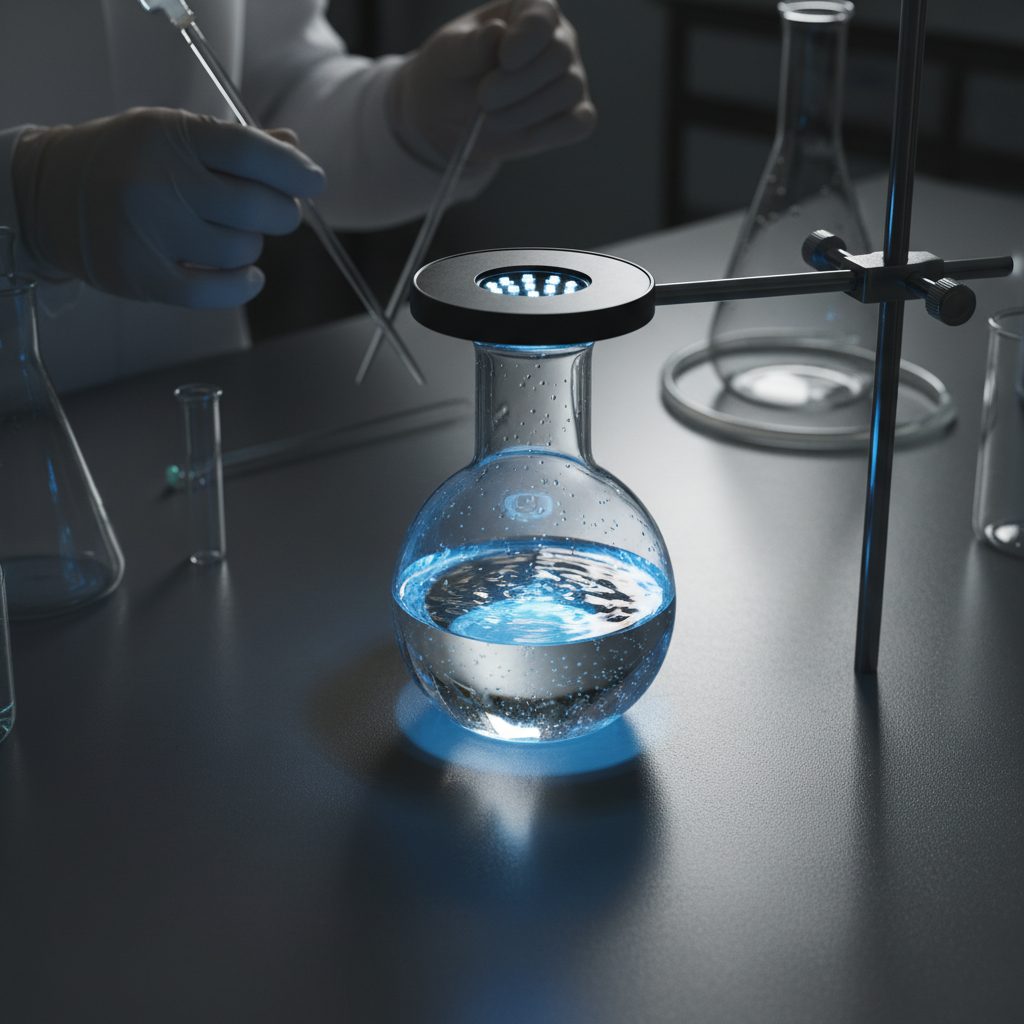
Alright, fellow science adventurers, buckle up. Today we are diving straight into the glowing world of optically active α-amino amides, a topic that sounds intense but is actually incredibly exciting once you break it down. These molecules are becoming some of the most valuable building blocks in modern chemistry, especially in drug discovery, peptide science, and advanced materials. And yes, light plays a starring role here.
Think of chemistry like building with LEGOs. Nature gives us a standard set of bricks called α-amino acids, which are responsible for making proteins, enzymes, and hormones. However, when scientists want more control, better performance, or entirely new functions, they design custom bricks. That is where optically active α-amino amides enter the picture.
These are nonnatural but highly useful molecular structures that give chemists precision, flexibility, and control that natural systems cannot always provide.
Optically active α-amino amides are closely related to amino acids, but instead of a carboxylic acid group, they contain an amide functionality. This small change opens up massive possibilities. The amide group improves stability, binding behavior, and compatibility with biological systems.
The phrase optically active refers to chirality. Many molecules exist as mirror images of each other, much like left and right hands. These mirror-image forms are called enantiomers. In biology, this distinction is critical. One enantiomer may heal, while the other may harm.
Because of this, synthesizing optically active α-amino amides with high selectivity is essential for pharmaceuticals. When chemists can reliably produce only the desired molecular hand, drugs become safer, more effective, and easier to regulate.

Chirality is not just a textbook concept. It has real-world consequences. A famous historical example is thalidomide, where one enantiomer acted as a sedative while the other caused severe birth defects. This event permanently changed how chemists and regulators think about chiral molecules.
Optically active α-amino amides are especially valuable because they can act as intermediates, scaffolds, or final products in medicinal chemistry. Their precise three-dimensional shape allows them to interact with enzymes and receptors like a key fits a lock.
As a result, modern drug discovery relies heavily on methods that produce molecules with exact stereochemical control.
Now here is where things get truly exciting. Traditional chemical synthesis often relies on high heat, harsh reagents, or heavy metals. Photoredox catalysis offers a cleaner, smarter alternative.
Photoredox catalysis uses visible light to activate a photocatalyst. When exposed to light, this catalyst enters an excited state and can transfer electrons in a controlled way. This electron movement enables the formation of reactive intermediates that drive new chemical bonds.
In the synthesis of optically active α-amino amides, photoredox catalysis allows chemists to combine simple and readily available starting materials such as aldehydes, amines, and formamides. Light triggers the reaction, while chiral catalysts or reaction environments guide the formation of the desired enantiomer.
This approach delivers high selectivity under mild conditions, which is a major breakthrough for scalable synthesis.
Light-driven chemistry offers several advantages that go far beyond novelty. First, it allows reactions to proceed at room temperature, which protects sensitive functional groups. Second, it reduces chemical waste and energy consumption. Third, it expands the types of reactions that chemists can perform.
For optically active α-amino amides, this means higher yields, better stereocontrol, and broader substrate scope. Chemists can explore molecular designs that were previously impractical or impossible.
As a result, photoredox catalysis is quickly becoming a core tool in modern synthetic chemistry.
Many drugs contain chiral centers, and optically active α-amino amides are frequently used in the synthesis of antiviral, anticancer, and neurological drugs. Their predictable behavior and tunable structure make them ideal for lead optimization and medicinal chemistry pipelines.
By simplifying access to these molecules, light-driven methods shorten development timelines and improve reproducibility.
Optically active α-amino amides can be incorporated into peptides to improve stability, bioavailability, and resistance to enzymatic degradation. These modified peptides often perform better in therapeutic and diagnostic applications.
This is especially important for next-generation peptide drugs that must survive longer in the body while maintaining high specificity.
Beyond biology, optically active α-amino amides are used in polymers, catalysts, and functional materials. Their chirality can influence optical properties, mechanical behavior, and molecular recognition.
This opens doors to applications in electronics, coatings, and sustainable materials science.
One of the most appealing aspects of photoredox catalysis is its alignment with green chemistry principles. Using light as an energy source reduces reliance on fossil fuels and minimizes hazardous byproducts.
When producing optically active α-amino amides, this means cleaner reactions, safer laboratories, and more sustainable industrial processes. In an era where environmental responsibility matters more than ever, these advantages cannot be overstated.
The ability to efficiently synthesize optically active α-amino amides using light-driven methods represents a shift in how chemists think about molecular construction. It shows that precision, sustainability, and scalability can coexist.
As photoredox catalysis continues to evolve, we can expect even more refined strategies for building complex chiral molecules. These advances will ripple across medicine, materials science, and chemical manufacturing.
Optically active α-amino amides are no longer niche compounds reserved for specialized laboratories. Thanks to photoredox catalysis, they are becoming accessible, versatile, and environmentally responsible building blocks.
By combining simple starting materials with the power of visible light, chemists are unlocking new possibilities for drugs, peptides, and materials. It is proof that sometimes the biggest breakthroughs come from the smallest particles, guided by a single photon.
As research continues, one thing is clear. The future of chemistry is bright, precise, and increasingly powered by light.
What’s your hidden peptide pearl? DM me—let’s co-author the next unearthed epic. 🧪