
Hey, brainiacs and peptide enthusiasts! Kai Rivera here, Chief Investigative Scribe at Peptides.today. I love uncovering wild science stories. Today, we dive into amyloid beta immune function. This sticky protein, amyloid beta (Aβ), stars as the bad guy in Alzheimer’s disease. It clumps up and wrecks brains. But hold on. New research flips the script. Aβ might protect your brain first. It acts like a bodyguard against germs and injuries. Scientists call this its secret double life. Picture Darth Vader as a kind teacher before going dark. Your mind will explode with this info.
Ready for the details? We explore how amyloid beta immune function works. It starts with a cool process called opsonization. Let’s break it down step by step.
Amyloid beta immune function grabs attention in fresh lab studies. Researchers suggest Aβ plays a key role in opsonization. You wonder, what is that? Immune cells patrol your body like security guards. They hunt bacteria and viruses. But invaders hide well. They act like sneaky ninjas. Opsonins solve this. These proteins tag bad guys. They make targets glow for immune cells. Think of a bright “kick me” sticker on enemies. Immune cells spot it fast. They grab and destroy.
Now, Aβ steps in. It tags infections or wounds in the brain. This guides immune action right to trouble spots. Studies back this up. They used fruit flies for proof. These bugs mimic human biology well. No, I did not lose my mind. Science loves fruit flies. They share core pathways with us.

Let’s zoom into the fruit fly experiment. It highlights amyloid beta immune function clearly. Scientists tweaked genes in Drosophila melanogaster. These flies buzz around ripe bananas. They created mutant flies. Some lacked Aβ and its precursor, APPL. APPL makes Aβ, like a big brother. Others overexpressed dAβ, the fly version of Aβ.
Next, they added parasitoid wasps. Gross, right? Wasps lay eggs in fly larvae. This triggers war. The fly immune system fights back. It forms capsules around eggs. Mutants failed badly. Their response weakened. They could not encapsulate eggs well. Chaos ruled.
But overexpressing dAβ changed everything. These flies bounced back strong. Immune cells encapsulated eggs perfectly. Researchers added Congo-red dye. It glows on amyloids under polarized light. Birefringence appeared! It showed on wasp eggs in dAβ flies. Controls lacked it. dAβ arrived first. It flagged invaders like a pro. This proves amyloid beta immune function in action.
Why fruit flies? They model human immunity well. Results hint at brain parallels. Transition to humans now.
Amyloid beta immune function extends beyond bugs. Human studies agree. Aβ acts as an antimicrobial peptide, or AMP. AMPs fight germs naturally. They work like brain antibiotics. Research shows Aβ kills viruses and bacteria. Herpes viruses top the list. It tackles others too.
In healthy brains, Aβ stays solo. It patrols quietly. But stress changes it. Infections or injuries call it often. Aβ gathers in response. Good at first. Then it clumps. Plaques form. That’s Alzheimer’s trouble.
Overactivation hurts. Immune cells rage too much. Inflammation spreads. Neurons die. Amyloid beta immune function turns harmful. It shifts from hero to villain. This matches disease patterns.
Alzheimer’s puzzles experts. Aβ plaques define it. Drugs target them. Results disappoint. They clear plaques but barely help memory. Side effects hit hard. Brain swelling and bleeds occur. Why? We ignored amyloid beta immune function.
New views blame triggers. Chronic infections spark Aβ response. Herpes or bacteria lurk. Inflammation builds. Aβ overreacts. Plaques overstimulate microglia. These are brain immune cells. Damage follows.
Studies link pathogens to Alzheimer’s. Herpes simplex virus stands out. It infects many. Aβ fights it via immune function. But endless battle leads to clumps. Bacteria like Lyme disease play roles too. Injuries add fuel. Head trauma boosts Aβ.
This flips old ideas. Aβ responds, not causes. Fix the trigger. Disease might halt.
Let’s unpack amyloid beta immune function more. Opsonization binds Aβ to pathogens. It exposes tags. Receptors on microglia grab them. Phagocytosis follows. Cells eat invaders.
As AMP, Aβ punches membranes. It disrupts germs directly. Short chains work best. Brain needs this defense. No blood-brain barrier blocks.
Balance matters. Low Aβ levels protect. High levels clump. Genetics influence it. APOE4 raises risk. It worsens amyloid beta immune function control.
Aging tips scales. Immune systems weaken. Infections persist. Aβ ramps up. Cycle spins.
Picture the switch. Amyloid beta immune function starts protective. Invaders arrive. Aβ tags them. Victory.
But repeat calls exhaust it. Monomers join. Oligomers form. Then fibrils. Plaques build. They trap Aβ wrong.
Plaques signal nonstop. Microglia attack everything. Tau proteins tangle next. Neurons starve. Memory fades.
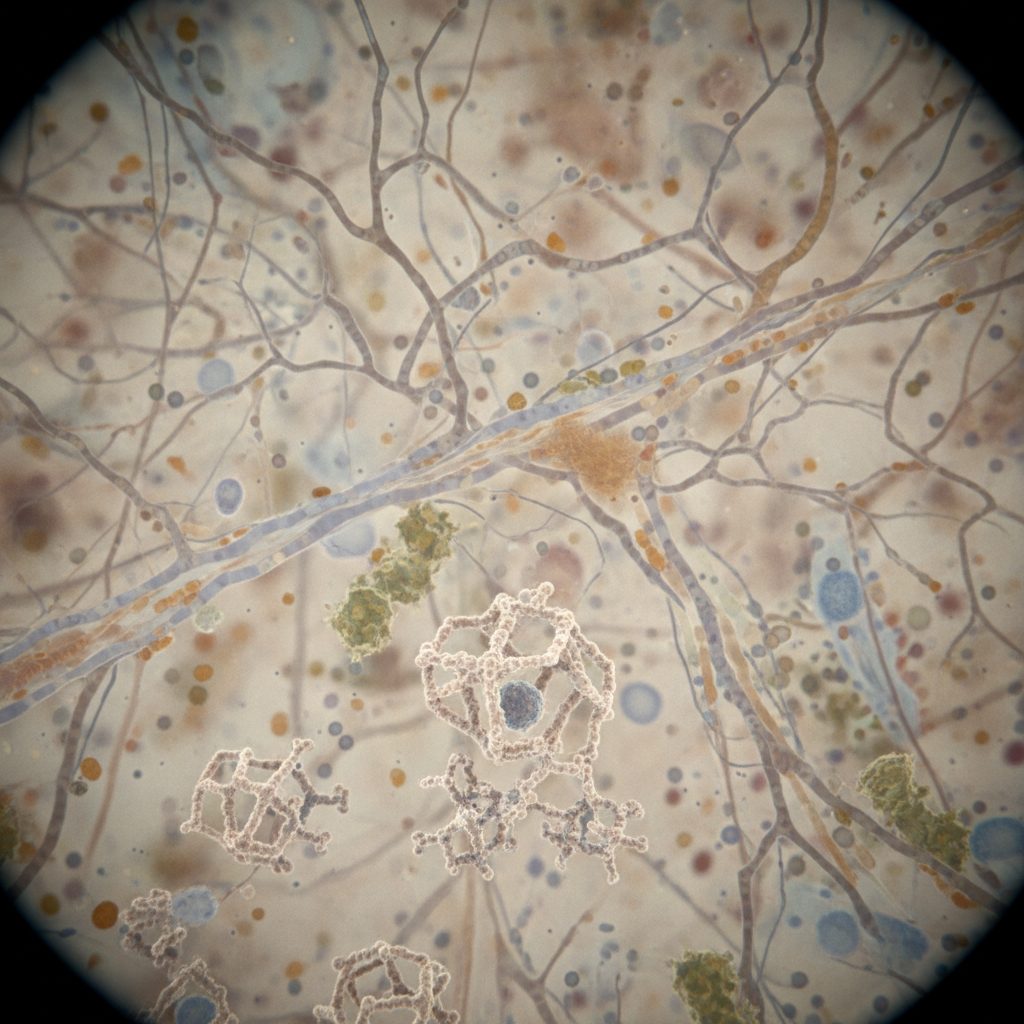
Captions help visualize. Research using Drosophila melanogaster shows amyloid beta immune function. Flies defend against invaders robustly.
When amyloid beta aggregates, it harms. Neuroinflammation rises in Alzheimer’s.
Old drugs blast Aβ. Lecanemab and donanemab try. They slow decline slightly. Risks remain high.
New hope targets roots. Boost healthy amyloid beta immune function. Tame overreactions.
Vaccines against triggers excite. Anti-herpes shots could cut risk. Anti-inflammatories help. Resolve infections first.
Gene therapies tweak APPL. Balance Aβ production. Lifestyle counts too. Exercise strengthens immunity. Diet fights inflammation. Sleep clears junk.
Clinical trials test this. Fly data guides human work. Results promise change.
This story thrills me. Biology hides gems. Amyloid beta immune function proves it.
What is your take on amyloid beta immune function? DM me. Let’s co-author the next epic!
All human research MUST be overseen by a medical professional