
Peptide nanofibrils are quietly becoming the ultimate wingman in the microscopic world of cell behavior. These tiny, self-assembling peptide structures help cells connect, communicate, and form meaningful biological relationships. Just like human interactions depend on timing and chemistry, cellular interactions rely on molecular cues that must align perfectly. Peptide nanofibrils help make those connections happen more efficiently by acting as adaptable matchmakers on the cell surface.
Cells constantly attempt to bind, signal, and exchange information. However, environmental conditions often make these interactions inefficient. This is where peptide nanofibrils step in, offering a flexible and responsive platform that adapts to cellular conditions rather than resisting them.
Peptide nanofibrils play a critical role in enhancing cell-cell interactions, which are essential for immune responses, tissue formation, and developmental processes. Cells depend on surface receptors and ligands to recognize one another. When this recognition fails, biological systems can break down.
Cell-cell interactions influence everything from wound healing to immune surveillance. However, natural cellular surfaces are not always optimized for efficient binding. Therefore, scientists have explored ways to engineer cell surfaces using peptide nanofibrils to improve interaction strength and reliability.
Because peptide nanofibrils assemble through noncovalent interactions, they allow reversible and tunable engagement. As a result, they offer a more biologically compatible solution compared to rigid synthetic scaffolds.
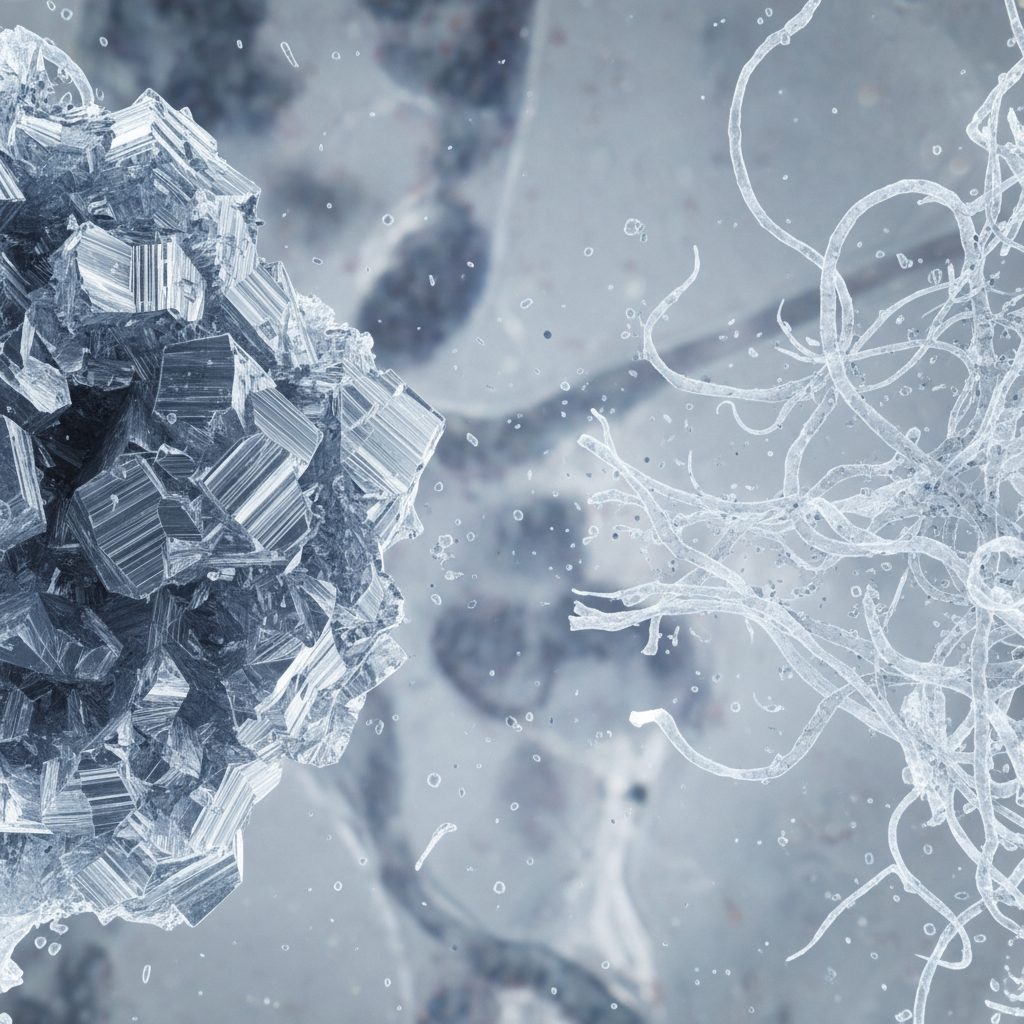
Peptide nanofibrils are formed when short amino acid sequences self-assemble into elongated nanostructures. These structures can be programmed to display specific ligands that promote cell binding. Importantly, peptide nanofibrils can assemble directly on live cell membranes without compromising cell viability.
Cell-surface engineering using peptide nanofibrils allows researchers to fine-tune how cells interact with each other. Instead of permanently modifying the cell surface, peptide nanofibrils provide a dynamic interface that responds to environmental cues.
This approach has gained attention in supramolecular biomaterials research because it mimics the adaptable nature of biological systems. Internal link opportunity here to a supramolecular peptides blog.

Peptide nanofibrils become even more powerful when their thermal stability is carefully controlled. Thermal responsiveness refers to how peptide nanofibrils behave when exposed to physiological temperatures. Some assemblies remain rigid, while others become more flexible and dynamic.
Interestingly, less thermally stable peptide nanofibrils often perform better in cell-binding applications. When exposed to body temperature, these nanofibrils partially disassemble and reassemble. This process increases ligand mobility and accessibility.
As a result, peptide nanofibrils with lower thermal stability enable more frequent and effective cell-cell engagement. External link opportunity here to ACS Nano or Biomacromolecules research on thermally responsive biomaterials.
Peptide nanofibrils undergo a controlled disassembly and reassembly pathway under thermal stimulation. Instead of collapsing completely, the structures become temporarily flexible. This flexibility allows ligands to reorient and engage with receptors more efficiently.
Because of this dynamic behavior, peptide nanofibrils act as adaptive scaffolds rather than static platforms. Consequently, cells experience improved interaction rates without requiring stronger chemical bonds.
Studies have demonstrated that thermally responsive peptide nanofibrils significantly increase cell-cell conversion rates compared to highly stable assemblies.
Experimental observations show a clear relationship between peptide nanofibril stability and interaction efficiency. When peptide nanofibrils exhibit low thermal stability, cell-cell conversion can reach over ninety percent. Medium stability assemblies show moderate interaction rates. In contrast, highly stable peptide nanofibrils result in significantly lower binding efficiency.
Therefore, peptide nanofibrils prove that flexibility often outperforms rigidity in biological systems. This principle aligns with broader trends in dynamic biomaterials research. External link opportunity to Nature Reviews Materials.
Peptide nanofibrils open new possibilities across multiple biomedical fields. In tissue engineering, they enable controlled cellular assembly, which improves tissue organization. In drug delivery, peptide nanofibrils can guide therapeutic cells toward specific targets.
Additionally, peptide nanofibrils may enhance immunotherapy strategies by improving immune cell recognition and engagement. Their reversible nature allows fine control over interaction timing and strength.
Internal link opportunity here to Amphix Bio peptide platforms or regenerative biomaterials content.
Peptide nanofibrils highlight a shift toward smarter, more adaptive materials in biomedical research. Instead of designing materials that resist biological motion, researchers are embracing systems that respond dynamically to it.
By leveraging thermal responsiveness, peptide nanofibrils provide a powerful tool for controlling cellular behavior. Their ability to disassemble and reassemble makes them ideal candidates for next-generation biomaterials.
Ultimately, peptide nanofibrils demonstrate that biological success often comes from flexibility rather than rigidity. When materials move with biology instead of against it, meaningful cellular connections become easier to achieve.
Peptide nanofibrils are more than just structural components. They are active participants in cellular communication. By tuning stability, responsiveness, and ligand presentation, scientists can guide cell behavior with unprecedented precision.
As research advances, peptide nanofibrils are expected to play a central role in understanding and manipulating complex biological systems.
What hidden potential do peptide nanofibrils still hold? The answer may redefine how we design materials for life itself.
All human research MUST be overseen by a medical professional