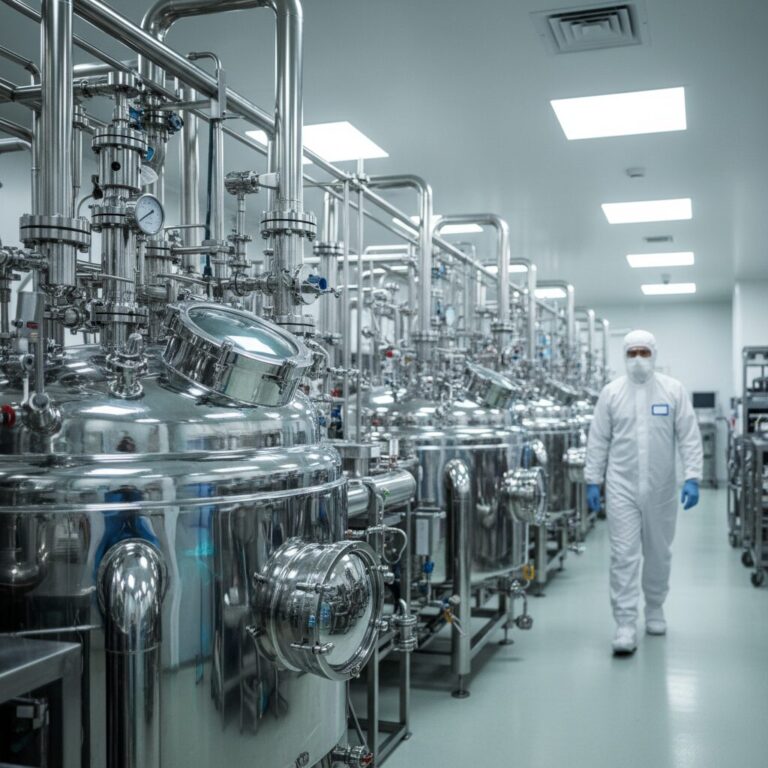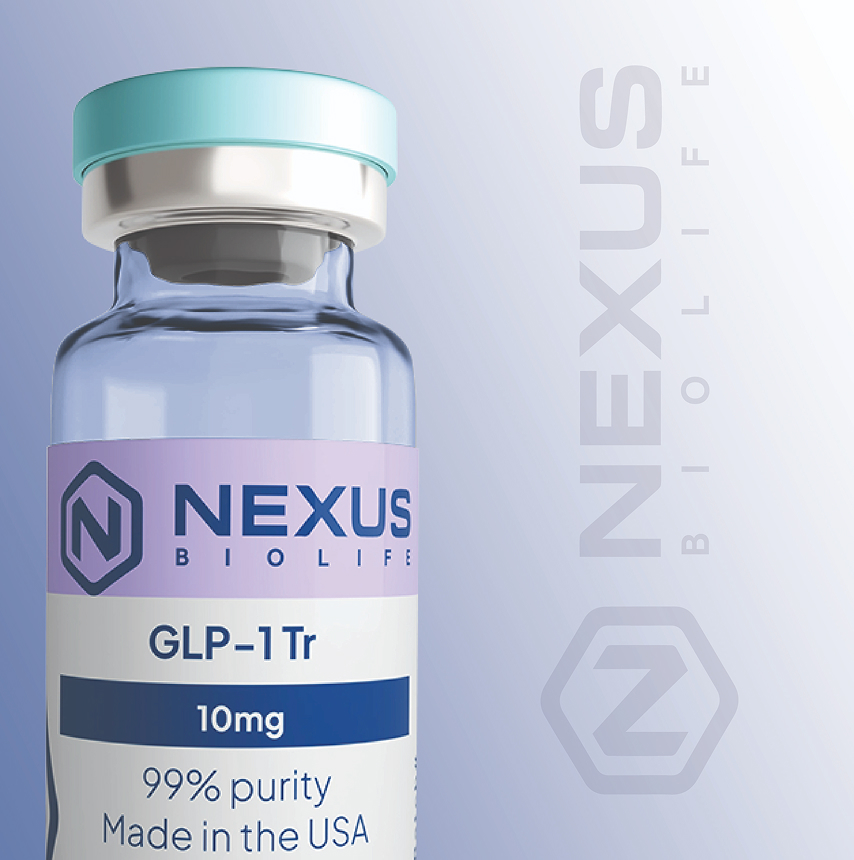

Alright, buckle up, peptide pals. Kai Rivera here, your Chief Investigative Scribe, and today we are stepping straight into the spotlight where TFA-free peptide synthesis meets antimicrobial peptides and some very unruly superbugs. If you thought peptide science was just about stringing amino acids together and calling it a day, think again. The way peptides are synthesized can dramatically shape how they behave, how they interact with membranes, and how clearly we can study their true mechanisms of action.
TFA-free peptide synthesis is becoming increasingly important in antimicrobial peptide research because traditional synthesis methods can quietly interfere with membrane activity, structural interpretation, and biological assays. And when you are studying peptides that literally dance with bacterial membranes, those details matter.
So yes, we are talking about superbugs, dynamic membranes, and transient water channels. But we are also talking about chemistry choices that either clarify the science or muddy the waters.
Let’s dig in.

Antibiotic resistance is not some distant sci-fi threat. It is a present-day global health challenge. Bacteria continue to evolve strategies that neutralize or evade conventional antibiotics, leaving researchers scrambling for new approaches. Antimicrobial peptides have emerged as promising candidates because they often act through membrane disruption rather than single-target inhibition.
However, understanding how antimicrobial peptides work depends heavily on how those peptides are made.
Many antimicrobial peptides are synthesized using solid-phase peptide synthesis protocols that rely on trifluoroacetic acid. TFA is commonly used during cleavage and deprotection steps. While effective, TFA can leave behind counterions or induce subtle chemical modifications that influence peptide folding, aggregation, and membrane interaction.
This is where TFA-free peptide synthesis enters the conversation. By eliminating trifluoroacetic acid from the synthesis and purification workflow, researchers gain peptides that more accurately reflect their intrinsic biophysical behavior.
When studying membrane activity, even small chemical artifacts can distort results.
For years, antimicrobial peptides were described as microscopic battering rams. The classic explanation suggested that these peptides insert themselves into bacterial membranes and form stable pores that cause ion leakage and cell death.
Two dominant models emerged.
The barrel-stave model proposed that peptides assemble into rigid, well-defined channels.
The toroidal pore model suggested that peptides bend the membrane inward, forming pores lined by both lipids and peptides.
These models helped move the field forward. But they also encouraged researchers to look for static structures where dynamic processes were actually at play.
When peptides are synthesized using TFA-containing methods, residual counterions can alter charge distribution. This affects how peptides align with lipid bilayers and how stable those pores appear in experimental systems. Some apparent pore formation may reflect synthesis artifacts rather than biological reality.
TFA-free peptide synthesis reduces these confounding variables and allows researchers to observe membrane interactions with greater confidence.
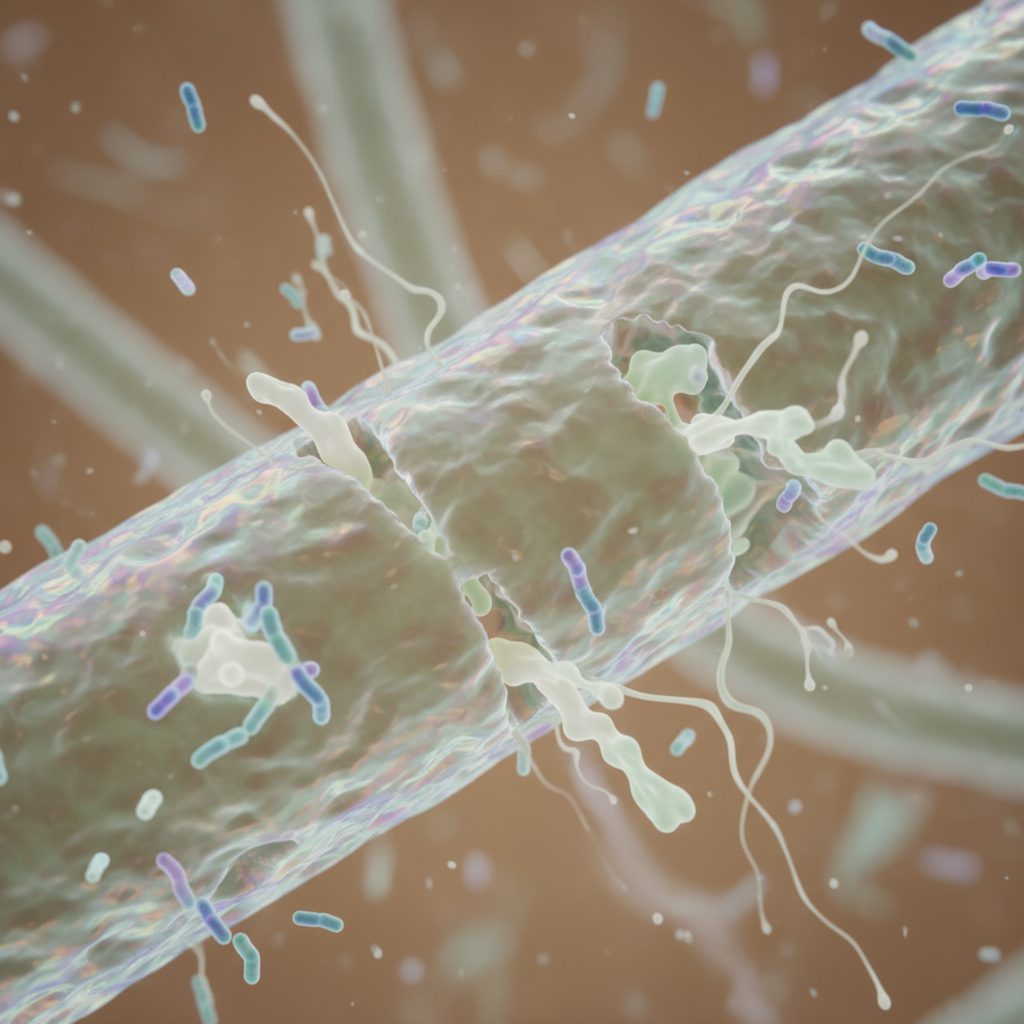
Recent studies suggest that antimicrobial peptides do not always form long-lived pores at all. Instead, they can induce transient membrane permeabilization through short-lived water channels that open and close rapidly.
This mechanism is more fluid, more chaotic, and more biologically plausible.
Peptides interact with lipid headgroups, disrupt packing, and lower the energetic barrier for water penetration. Ions and small molecules leak through without the need for a permanent pore structure.
Here is where TFA-free peptide synthesis becomes critical.
Peptides synthesized without TFA show more consistent membrane binding behavior, reduced aggregation, and improved reproducibility across biophysical assays. This has helped clarify that many antimicrobial peptides act through collective, dynamic membrane stress rather than rigid pore formation.
In short, removing TFA removes noise from the data.
TFA-free peptide synthesis offers several advantages that directly impact antimicrobial peptide studies.
First, it improves peptide purity without introducing strong acid counterions that influence charge and solubility.
Second, it enhances structural accuracy. Circular dichroism, NMR, and scattering experiments benefit from peptides that fold and interact naturally with membranes.
Third, it improves biological relevance. When peptides behave more like they would in physiological environments, assay results become more predictive.
Fourth, it supports reproducibility. Small variations in synthesis chemistry can lead to large variations in antimicrobial activity. TFA-free workflows reduce that variability.
This is especially important when comparing peptide analogs or conducting structure activity relationship studies.
One of the biggest challenges in antimicrobial peptide development is selectivity. The goal is to disrupt bacterial membranes without harming host cells.
Bacterial membranes are typically richer in negatively charged lipids. Mammalian membranes are more neutral.
Peptides synthesized via TFA-free peptide synthesis show more reliable charge presentation, which helps researchers distinguish genuine selectivity from synthesis-induced artifacts.
This clarity allows for better optimization of peptide sequences that preferentially target bacterial membranes.
Bacteria develop resistance most easily when drugs target a single enzyme or receptor.
Antimicrobial peptides that disrupt membranes dynamically are harder to resist because they do not rely on a fixed molecular target.
TFA-free peptide synthesis helps confirm whether resistance profiles are genuine or skewed by peptide instability or aggregation caused by synthesis residues.
This distinction is critical when evaluating peptides as long-term therapeutic candidates.
Understanding dynamic membrane disruption opens new design strategies.
Instead of engineering peptides to form rigid pores, researchers can design sequences that maximize transient destabilization.
Hydrophobic moment, charge distribution, and conformational flexibility all become tunable parameters.
TFA-free peptide synthesis ensures that these design features are expressed cleanly in the final molecule.
This approach supports more accurate computational modeling, better in vitro correlation, and clearer translational potential.
While this discussion centers on antimicrobial peptides, TFA-free peptide synthesis has implications across peptide science.
It benefits cell-penetrating peptides, signaling peptides, and membrane-active research tools.
As peptide therapeutics continue to expand, synthesis purity and chemical context will increasingly shape experimental outcomes.
The chemistry behind the peptide is no longer a background detail. It is part of the biology.
The fight against superbugs is not just about finding stronger molecules. It is about understanding how those molecules behave at the membrane interface.
TFA-free peptide synthesis is helping peel back layers of artifact and assumption, revealing a more dynamic and nuanced picture of antimicrobial peptide activity.
Membranes ripple. Water channels flicker. Peptides dance.
And when the chemistry is clean, the science finally gets to lead.
So the next time someone tells you peptides just punch holes and call it a day, smile knowingly. The truth is far more interesting, far more dynamic, and increasingly TFA-free.
What hidden peptide secret are you synthesizing next?
All human research MUST be overseen by a medical professional.