
While there is no single magic potion that instantly reverses time, modern skincare science has given us some truly powerful allies. Two of the most exciting among them are peptides and exosomes. Think of them as tiny, super smart workers behind the scenes, supporting, repairing, and refreshing your skin in ways that genuinely make a difference.
You know that familiar moment when you look in the mirror and your skin seems a little dull, a little less bouncy, and maybe those fine lines are starting to wave hello a little too confidently? We have all been there.
Your skin feels like it is trying to whisper something important, but the message is not quite clear. For years, people have been searching for that miracle skincare ingredient that wakes tired skin back up and brings the glow back to life.
So let us decode them together. By the time you finish reading, you will understand what they are, why skincare experts love them, and how they can help your skin feel stronger, firmer, calmer, and more radiant.

To understand why everyone is suddenly obsessed with peptides and exosomes, you need a quick peek into how your skin actually works.
Your skin is like a beautifully engineered structure. Its firmness and bounce mostly come from collagen and elastin. These are strong structural proteins that keep skin smooth, lifted, and youthful.
Over time, due to aging, stress, sun exposure, lack of sleep, and environmental damage, collagen starts to break down faster than your body replaces it. When this happens, your skin can start looking tired, dull, and less firm.
This is where peptides and exosomes step into the story.
Let us start with peptides. At their most basic level, peptides are short chains of amino acids. Amino acids are the building blocks of proteins, and proteins are what create collagen and elastin in your skin. Think of peptides like tiny instruction manuals. When applied topically in skincare, they act as messengers that tell your skin to start repairing, rebuilding, and strengthening itself.
Your body naturally produces peptides, but as we age, that natural production slows down. It is like the workers in the collagen factory begin taking longer coffee breaks. When you apply peptide skincare, you are basically sending reinforcements. You are reminding your skin how to behave like younger, healthier skin again.
And here is the exciting part. Different peptides have different jobs. So when we talk about peptides and exosomes together, peptides often work like experienced architects who know exactly how to guide skin into rebuilding itself better.
There are many types of peptides in skincare and each one brings its own special superpower.
Signal peptides act like coaches for your skin. They encourage your skin to produce more collagen and elastin. This can lead to firmer, smoother looking skin and help reduce the appearance of fine lines over time.
Carrier peptides help deliver essential trace minerals like copper into the skin. These minerals are important for enzyme activity and wound healing. Copper peptides especially have earned a reputation for supporting skin repair and resilience.
These are often called the gentle alternative to injectables. Ingredients like Acetyl Hexapeptide-8 help relax repeated facial muscle movement, which can soften the look of expression lines.
These peptides help slow down the breakdown of collagen and elastin. In simple words, they protect what you already have for longer.
So when people talk about peptides and exosomes being powerful together, peptides are already well studied, trusted, effective, and widely loved for their impressive benefits.
One of the biggest advantages of peptides is that they tend to be gentle. Unlike some active ingredients that can irritate or overwhelm the skin, peptides are generally very well tolerated by most skin types. Many people can use them both morning and night. They also pair well with other skincare favorites like hyaluronic acid, niacinamide, and even retinoids.
Research over several decades has shown that peptides support collagen production, improve skin firmness, and help soften the look of wrinkles. They can also contribute to a stronger skin barrier. A healthy skin barrier means better moisture retention, smoother texture, and less irritation. So it is not surprising that peptides have become a trusted favorite in advanced skincare formulas.
If peptides are the seasoned professionals, exosomes are the cutting edge technology of skincare. They have become one of the most talked about topics in modern dermatology and beauty innovation. So what exactly are they?
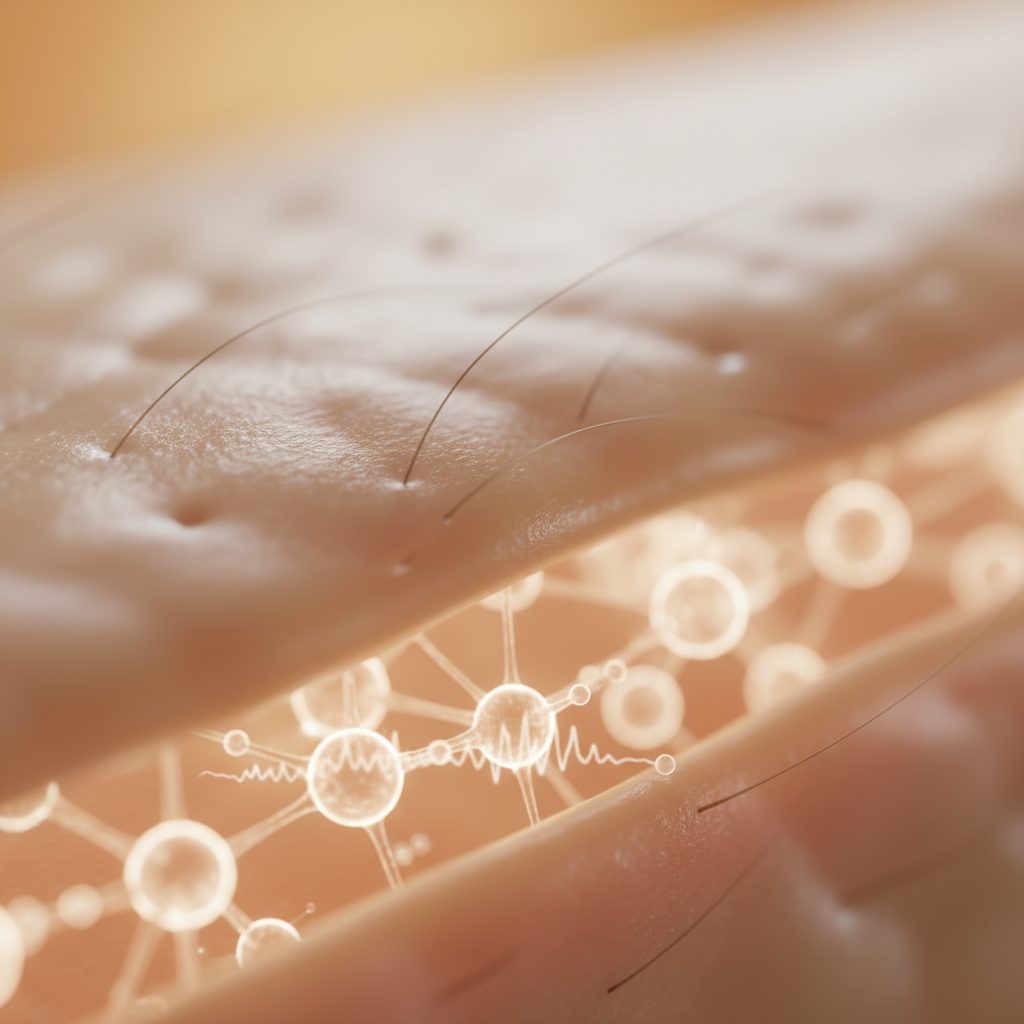
Think of your skin cells constantly communicating with each other. They send signals, messages, and instructions all day long. Exosomes are tiny, extremely small vesicles that help carry these messages between cells. They can contain proteins, lipids, growth factors, and even small pieces of genetic information.
When used in skincare, peptides and exosomes together create a powerful support system. Where peptides guide and strengthen, exosomes help deliver advanced cellular messages that can support repair, regeneration, and renewal.
Exosomes are exciting because of what they seem capable of helping skin do.
They may support faster cell turnover, which helps skin look fresher and more radiant. They appear to play a role in calming inflammation. This is great news for stressed, sensitive, or irritated skin. They also may help stimulate collagen production, which supports firmer, younger looking skin.
Because exosomes can carry highly specific biological signals, they potentially offer more targeted skin support. Think of them like highly intelligent personal trainers for your skin cells. They do not just show up and guess what to do. They arrive with a detailed plan.
While exosomes are incredibly promising, it is important to stay grounded in real science. Research is exciting, but still evolving. Some studies are smaller and not all exosome skincare products are formulated the same way. Consistency and standardization in the industry are still developing.
Another challenge is stability. Exosomes are delicate structures. If not formulated or stored correctly, they may lose effectiveness. Many brands are working with methods like freeze drying to keep them stable.
So when we talk honestly about peptides and exosomes, peptides are more established and heavily researched, while exosomes represent the exciting future of regenerative skincare.
Here is the beautiful part. There is no battle here. There is no single winner. Instead, peptides and exosomes can complement each other incredibly well.
Peptides bring reliability, proven benefits, strengthening power, and long term structural support for your skin. Exosomes bring innovation, advanced communication, calming properties, and impressive regenerative potential.
Some modern skincare formulas now combine peptides and exosomes together. When done well, this gives your skin the benefit of strong foundational support plus intelligent modern cellular signaling. It is like having experienced architects and visionary designers working together on your skin’s dream renovation project.
Almost anyone interested in healthy, youthful, resilient skin can benefit from peptides. They are especially great for people noticing:
Exosomes may be beneficial for people dealing with:
Of course, every skin is unique. Patch testing and consistency are key. And if someone has medical skin conditions, consulting a dermatologist is always wise.
If you are curious about using peptides and exosomes, here are general tips.
Great skincare is about supporting your skin rather than forcing it.
Your skin is not aging against you. It is responding to life, time, stress, and environment. Ingredients like peptides and exosomes help support what your skin is already trying to do naturally. They do not replace your skin. They empower it.
So whether you love tried and trusted peptides or feel inspired by the futuristic potential of exosomes, remember that you are already doing something powerful. You are choosing to understand your skin and support it.
Your skin’s story is still unfolding. And with the right care, it can absolutely be a glowing one.
✨
References
All human research MUST be overseen by a medical professional.