The rise of Peptide CDMO 2.0 marks a major leap forward in peptide manufacturing. This next-generation model blends AI-driven synthesis optimization with continuous manufacturing to deliver faster, safer, and more efficient peptide therapeutics.
With an expected 12.9% CAGR from 2025 to 2034, the Peptide CDMO 2.0 market is reshaping how peptide-based drugs move from the lab to the clinic. This innovation means higher purity, quicker timelines, and greater accessibility for treatments in oncology, metabolic disorders, and rare diseases.
Peptide CDMO 2.0 goes far beyond outsourcing it’s a complete redesign of peptide drug production. While methods like Solid Phase Peptide Synthesis (SPPS) and Liquid Phase Peptide Synthesis (LPPS) remain foundational, the integration of digital intelligence and automation has revolutionized every stage of development.
This shift isn’t incremental it’s essential. With complex peptides becoming central to modern therapeutics, manufacturers must deliver speed, quality, and scalability.
(External link suggestion: InsightAce Peptide CDMO 2.0 Market Report)
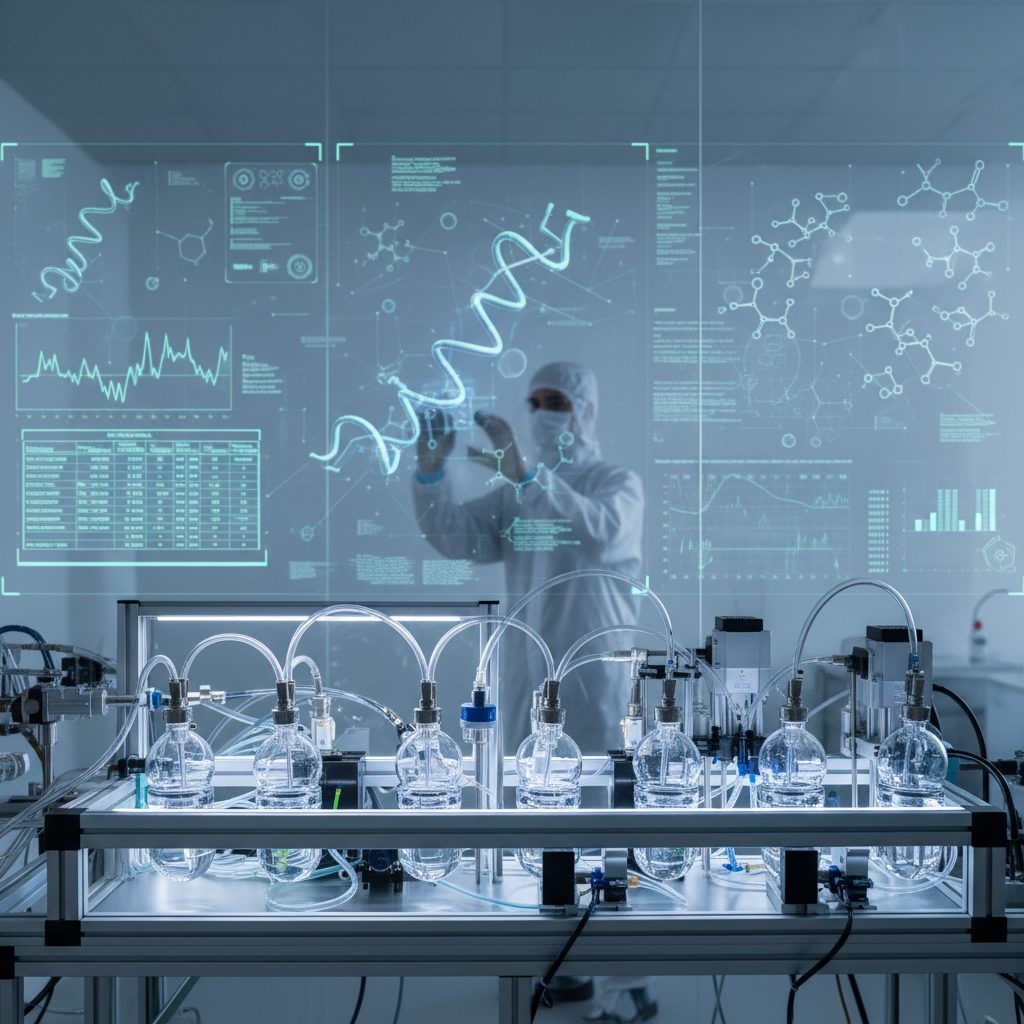
Artificial Intelligence is the heart of Peptide CDMO 2.0. Traditional peptide synthesis often faces low yields and lengthy optimization cycles. AI changes that. By analyzing thousands of data points from reaction parameters to solvent selections machine learning models can predict ideal synthesis conditions within hours, not months.
For example, AI systems can suggest alternative coupling reagents for complex peptide chains, improving yields and purity. This reduces waste, shortens production time, and enhances clinical safety.

In Peptide CDMO 2.0, continuous manufacturing replaces traditional batch processing. Instead of working in isolated steps, every process reaction, purification, and filtration flows continuously.
Key advantages include:
Companies like WuXi AppTec and Lonza are expanding these capabilities, adding digital integration and automation to ensure efficiency. WuXi’s 2024 upgrade tripled peptide synthesis capacity to 32,000 liters of SPPS reactor volume.
(External link: WuXi TIDES Expansion News)
The clinical viability of Peptide CDMO 2.0 is clear. These platforms reduce production cycles from months to weeks and enable high-quality manufacturing for even complex peptides like GLP-1 analogues and peptide-drug conjugates (PDCs).
In practice, AI-assisted synthesis identifies process bottlenecks early, while continuous flow systems maintain stable product quality. Together, they drastically reduce failure risks and regulatory hurdles.
Regulators are embracing innovation in Peptide CDMO 2.0. The FDA and EMA now encourage continuous manufacturing through initiatives like the Advancing Pharmaceutical Manufacturing program. These programs support technologies that enhance drug quality and supply chain reliability.
From a business standpoint, integrating AI and automation shortens the path from preclinical development to commercial launch, improving ROI and patient access.
(External link: FDA’s Advancing Pharmaceutical Manufacturing Initiative)
The future of Peptide CDMO 2.0 is driven by collaboration. Leading CDMOs are forming strategic partnerships to expand their biochemical and manufacturing capacities. The PolyPeptide–Numaferm collaboration, for instance, combines sustainable biochemical synthesis with large-scale GMP production.
In the long term, Peptide CDMO 2.0 will become the standard model. Its flexibility, speed, and precision perfectly align with the growing demand for personalized medicine and complex peptide therapies.
(External link: PolyPeptide & Numaferm Partnership Announcement)
The shift to Peptide CDMO 2.0 is more than a technological upgrade it’s a new era for peptide therapeutics. By merging AI intelligence with manufacturing innovation, this model eliminates inefficiencies, reduces costs, and ensures consistency from molecule design to clinical delivery.
Stay ahead of the curve the next breakthrough peptide is already in motion.
All human research MUST be overseen by a medical professional